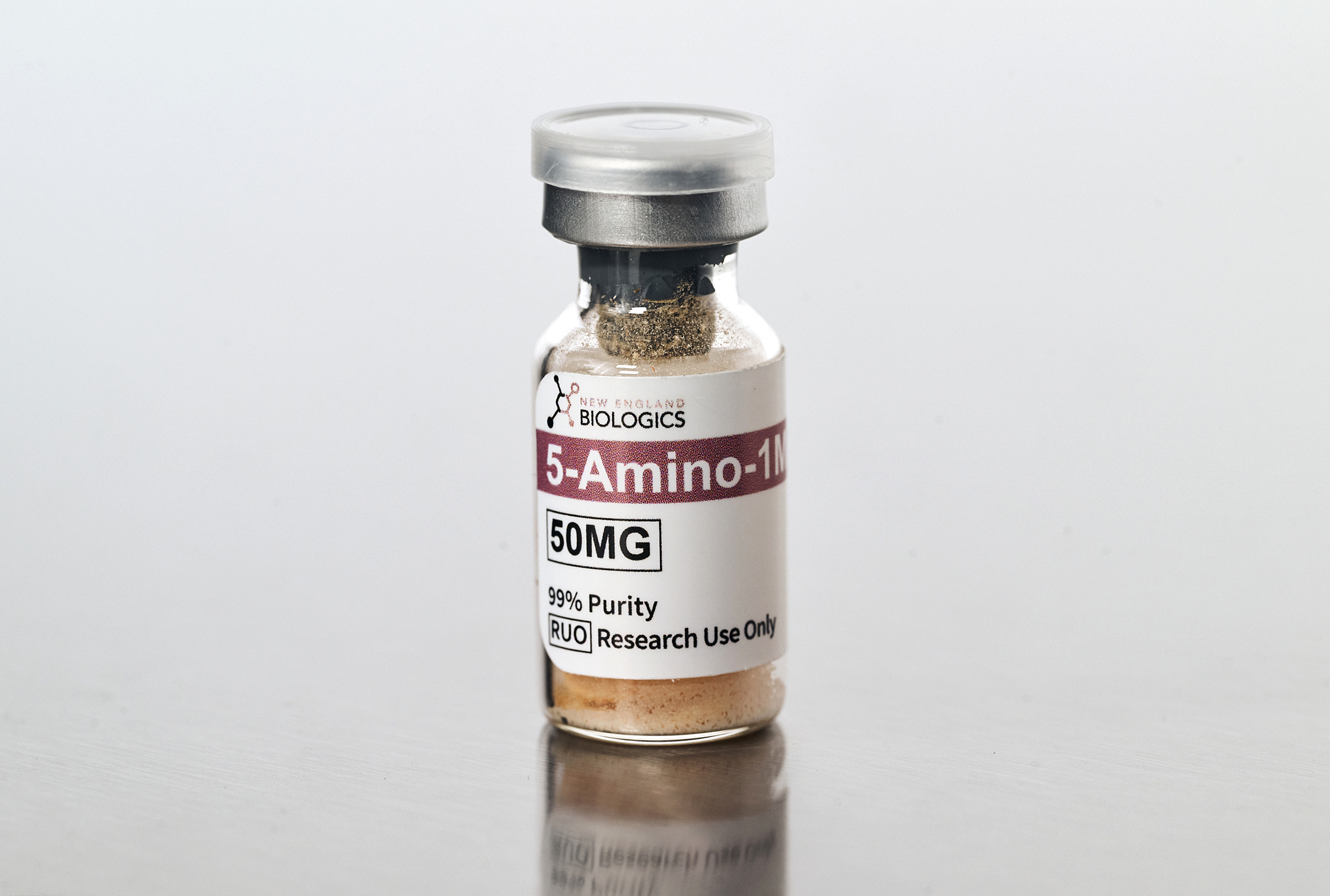
5-Amino-1MQ
NNMT inhibitor that boosts cellular NAD+ and activates SIRT1. Reduces fat mass without affecting food intake or lean mass in preclinical obesity models.
Normal Protocol
Advanced Protocol
Also Known As
5-Amino-1-methylquinolinium, NNMT inhibitor
Mechanism of Action
Product
Half-Life
Not precisely characterized in published literature
Administration Routes
Dosing Protocols
Key Research Findings
5-Amino-1-methylquinolinium (5-Amino-1MQ) is a small molecule inhibitor of nicotinamide N-methyltransferase (NNMT), an enzyme that regulates cellular energy metabolism and is overexpressed in adipose tissue of obese individuals. By blocking NNMT, 5-Amino-1MQ increases NAD+ levels in cells, activates SIRT1 (a longevity-associated deacetylase), and shifts metabolic programming away from fat storage toward fat oxidation.
Mechanism of Action
NNMT consumes SAM (S-adenosylmethionine) and NAD+ in a methylation reaction that produces 1-methylnicotinamide. In obesity, NNMT is upregulated in white adipose tissue, creating a metabolic sink that depletes SAM and reduces NAD+ availability. By inhibiting NNMT, 5-Amino-1MQ restores NAD+ pools, reactivates SIRT1-mediated metabolic pathways, and reverses the gene expression profile that promotes fat storage.
Research Evidence
Neelakantan et al. (2018, Biochemical Pharmacology) demonstrated that 5-Amino-1MQ treatment reduced body weight and white adipose tissue mass in diet-induced obese mice without affecting food intake or lean mass. Treated mice showed increased energy expenditure and improved cholesterol profiles. The compound shrank adipocytes (fat cells) to a smaller, healthier size and reduced markers of metabolic dysfunction.
Side Effects & Warnings
Legal Status
Molecular Weight
173.21 g/mol
Amino Acid Sequence
Small molecule (not a peptide): 5-Amino-1-methylquinolinium
Class
Research Status
PreclinicalHalf-Life
Not precisely characterized in published literature
Routes
Category
Performance & Body Composition