AOD-9604
Modified GH fragment (amino acids 177-191) that stimulates fat metabolism without GH side effects. FDA GRAS-approved. Also studied for cartilage repair in osteoarthritis.
Normal Protocol
Advanced Protocol
Also Known As
Advanced Obesity Drug 9604, hGH Fragment 177-191 (modified), Tyr-hGH177-191
Mechanism of Action
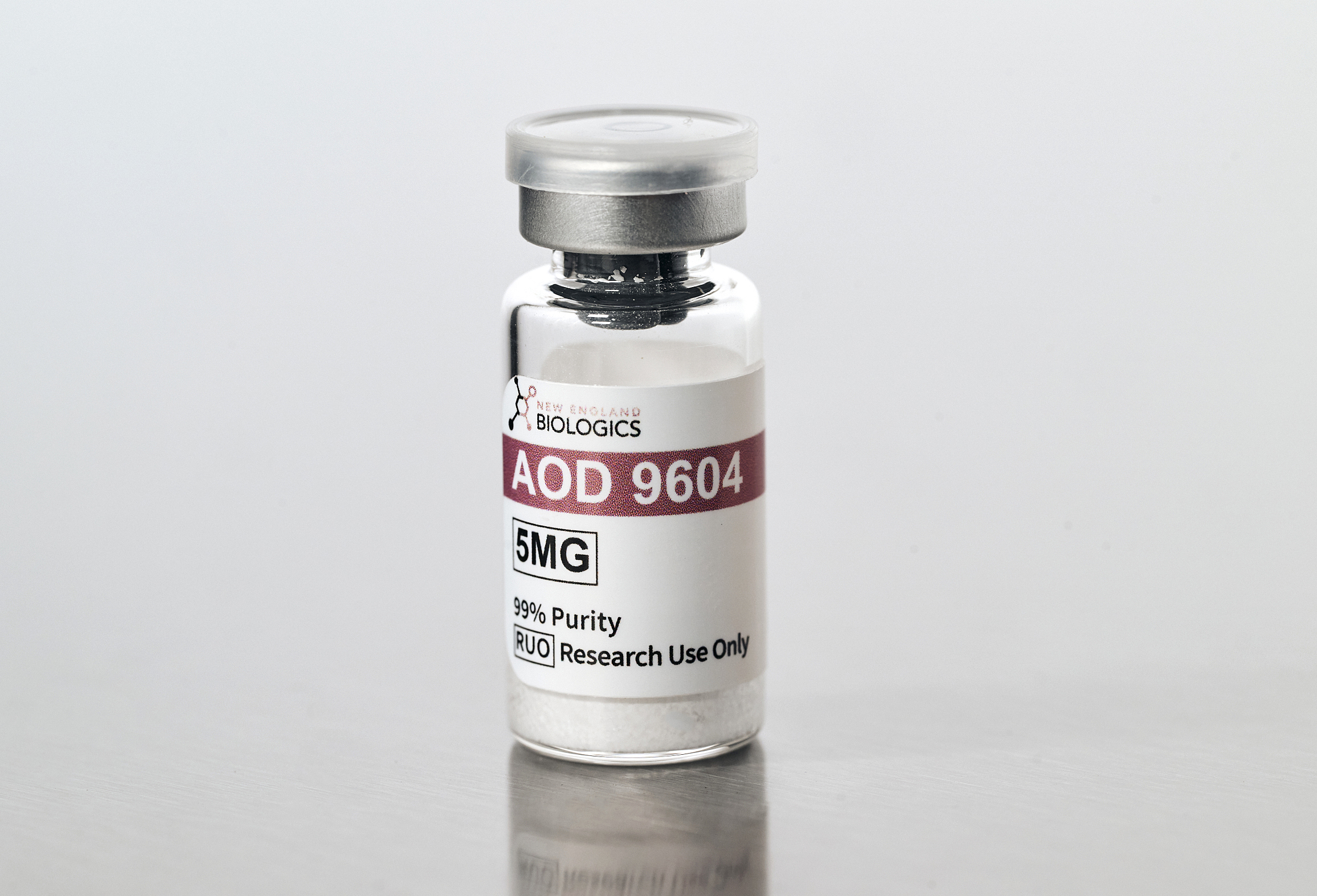
Product
Half-Life
Short, approximately 30-60 minutes
Administration Routes
Dosing Protocols
Key Research Findings
AOD-9604 (Advanced Obesity Drug-9604) is a modified fragment of human growth hormone comprising amino acids 177-191, with a tyrosine residue added at the N-terminus for stability. Developed by Metabolic Pharmaceuticals in Australia, AOD-9604 was designed to isolate the fat-metabolizing activity of GH while eliminating its growth-promoting and diabetogenic effects.
Mechanism of Action
AOD-9604 mimics the lipolytic (fat-burning) action of the C-terminal fragment of growth hormone. It stimulates lipolysis (fat breakdown) and inhibits lipogenesis (fat formation) by interacting with the beta-3 adrenergic receptor pathway. Critically, it does not affect IGF-1 levels, blood glucose, or tissue growth, meaning it produces fat loss without the metabolic side effects of full-length GH.
Research has also identified chondroprotective properties, with AOD-9604 stimulating proteoglycan and collagen production in articular cartilage, leading to investigation for osteoarthritis treatment.
Clinical Research
AOD-9604 completed Phase IIb clinical trials for obesity (Stier et al., 2013). While the oral formulation showed a trend toward greater weight loss versus placebo, results did not reach statistical significance, and the obesity drug program was discontinued. However, the peptide subsequently received FDA GRAS (Generally Recognized as Safe) status as a food additive in 2014.
The osteoarthritis program has shown more promise. Preclinical studies demonstrated that AOD-9604 stimulates cartilage repair by promoting chondrocyte proliferation and matrix synthesis. A Phase II clinical trial for knee osteoarthritis (intra-articular injection) showed improvement in pain and function scores.
Side Effects & Warnings
Legal Status
Molecular Weight
1817.12 g/mol
Amino Acid Sequence
Tyr-Leu-Arg-Ile-Val-Gln-Cys-Arg-Ser-Val-Glu-Gly-Ser-Cys-Gly-Phe
Class
Research Status
Clinical TrialsHalf-Life
Short, approximately 30-60 minutes
Routes
Category
Performance & Body Composition