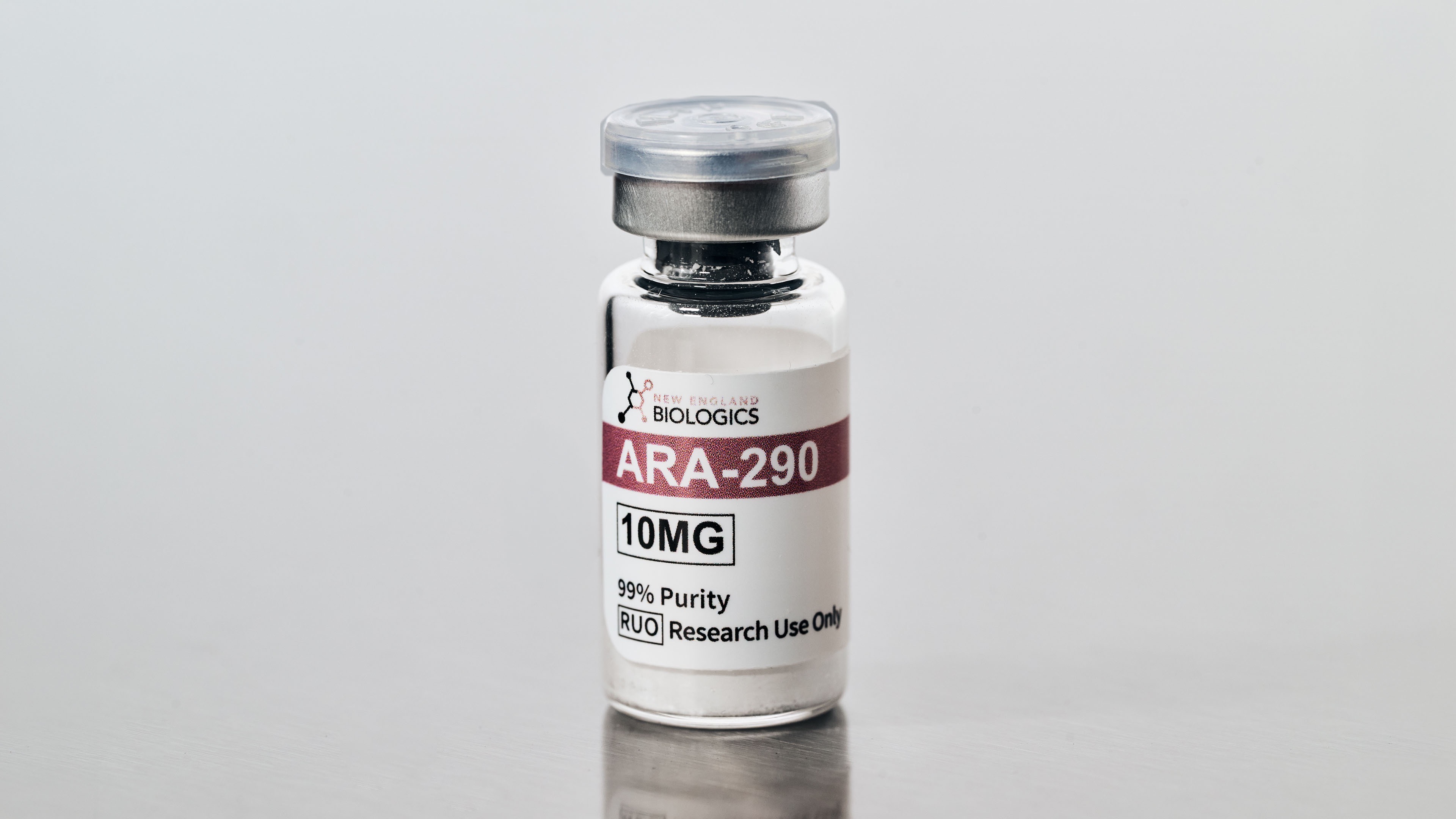
ARA-290 (Cibinetide)
ARA-290, also known as Cibinetide, is a synthetic 11-amino acid peptide derived from the helix-B surface of erythropoietin (EPO). It was engineered to retain EPO’s tissue-protective and anti-inflammatory properties while eliminating its blood cell-stimulating (erythropoietic) effects, making it a safer candidate for therapeutic use. Overview ARA-290 selectively activates the innate repair receptor (IRR), a heterodimer […]
Normal Protocol
Advanced Protocol
Also Known As
Cibinetide, EPO-derived peptide, Helix-B surface peptide
Mechanism of Action
Product
Half-Life
Approximately 20 minutes (terminal half-life after subcutaneous injection)
Administration Routes
Dosing Protocols
Key Research Findings
ARA-290, also known as Cibinetide, is a synthetic 11-amino acid peptide derived from the helix-B surface of erythropoietin (EPO). It was engineered to retain EPO’s tissue-protective and anti-inflammatory properties while eliminating its blood cell-stimulating (erythropoietic) effects, making it a safer candidate for therapeutic use.
Overview
ARA-290 selectively activates the innate repair receptor (IRR), a heterodimer of the EPO receptor and the beta common receptor (CD131). This receptor is expressed on a wide range of tissues including neurons, endothelial cells, and immune cells. By targeting the IRR rather than the classical EPO receptor, ARA-290 promotes tissue repair and reduces inflammation without the risks associated with EPO therapy such as thrombosis and tumor growth.
Research Highlights
ARA-290 has been studied in multiple Phase II clinical trials for conditions involving small fiber neuropathy, chronic pain, and metabolic dysfunction. Key findings include:
- In patients with sarcoidosis-associated small fiber neuropathy, ARA-290 reduced neuropathic pain scores and improved corneal nerve fiber density, indicating actual nerve regeneration.
- In type 2 diabetes patients, ARA-290 improved metabolic control (reduced HbA1c) and reduced neuropathic symptoms over a 28-day treatment period.
- Preclinical models of diabetic neuropathy showed reduced allodynia, improved nerve morphology, and better nerve conduction after ARA-290 treatment.
- ARA-290 also antagonizes the TRPV1 (transient receptor potential vanilloid 1) channel, providing direct analgesic effects independent of its tissue-repair mechanism.
Clinical Applications Under Investigation
- Small Fiber Neuropathy: Both sarcoidosis-related and diabetic neuropathy have shown improvements in clinical trials.
- Chronic Pain: TRPV1 antagonism provides disease-modifying and analgesic effects for neuropathic pain conditions.
- Metabolic Syndrome: Improvements in glucose metabolism and insulin sensitivity observed in diabetic patients.
- Organ Protection: Preclinical data suggests protective effects against ischemia-reperfusion injury in cardiac, renal, and neural tissues.
Safety Profile
ARA-290 has demonstrated a favorable safety profile across multiple clinical trials. Unlike EPO, it does not stimulate red blood cell production, eliminating the need for hemoglobin monitoring and reducing the risk of thrombotic events. Reported side effects in clinical studies have been generally mild with no dose-limiting toxicity observed.
Side Effects & Warnings
Legal Status
Molecular Weight
1257 Da
Amino Acid Sequence
QEQLERALNSS (pyroglutamate-Glu-Gln-Leu-Glu-Arg-Ala-Leu-Asn-Ser-Ser)
Class
Research Status
Clinical TrialsHalf-Life
Approximately 20 minutes (terminal half-life after subcutaneous injection)
Routes
Category
Cognitive & Neuroprotective