Bronchogen
Bronchogen is a short bioregulatory peptide (Ala-Glu-Asp-Leu) developed through the research of Professor Vladimir Khavinson at the St. Petersburg Institute of Bioregulation and Gerontology. It belongs to the class of Khavinson peptides — small synthetic peptides designed to regulate gene expression in specific tissue types. Bronchogen specifically targets bronchial and lung tissue, where it is […]
Normal Protocol
Advanced Protocol
Also Known As
Bronchogen peptide, Bronchial bioregulator, Lung bioregulator peptide, Khavinson bronchial peptide
Mechanism of Action
Product
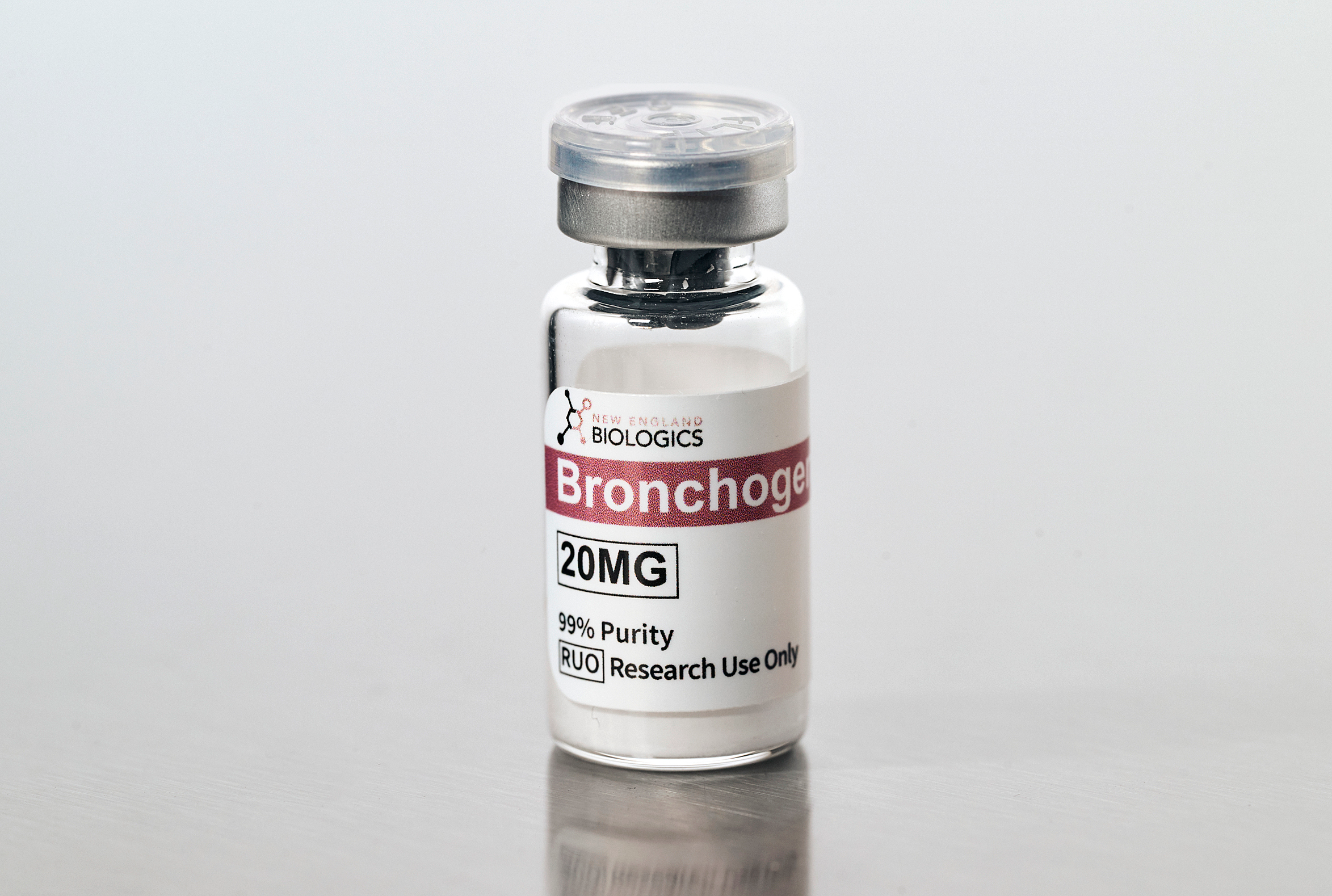
Half-Life
Not precisely established. Short peptides of this class are rapidly metabolized but proposed to exert lasting epigenetic effects beyond plasma half-life.
Administration Routes
Dosing Protocols
Key Research Findings
Bronchogen is a short bioregulatory peptide (Ala-Glu-Asp-Leu) developed through the research of Professor Vladimir Khavinson at the St. Petersburg Institute of Bioregulation and Gerontology. It belongs to the class of Khavinson peptides — small synthetic peptides designed to regulate gene expression in specific tissue types. Bronchogen specifically targets bronchial and lung tissue, where it is proposed to normalize respiratory function by interacting with DNA at the epigenetic level.
The peptide is part of a broader family of bioregulators that includes Cardiogen (heart), Chonluten (lungs), Cartalax (cartilage), and Vilon (immune). Each targets distinct tissue types through complementary DNA-binding mechanisms. Bronchogen was developed as a synthetic analog of endogenous peptide signals found in bronchial tissue extract (Bronchomunal).
Research in cell cultures and animal models suggests Bronchogen may help restore normal bronchial epithelial function, support mucociliary clearance, and promote healthy respiratory tissue maintenance, particularly in aged or damaged tissue. It has been used in Russian clinical settings as part of peptide bioregulation protocols for respiratory support.
Side Effects & Warnings
Legal Status
Molecular Weight
418.44 g/mol
Amino Acid Sequence
Ala-Glu-Asp-Leu (tetrapeptide)
Class
Research Status
PreclinicalHalf-Life
Not precisely established. Short peptides of this class are rapidly metabolized but proposed to exert lasting epigenetic effects beyond plasma half-life.
Routes
Category
Healing & Recovery