Cagrilintide
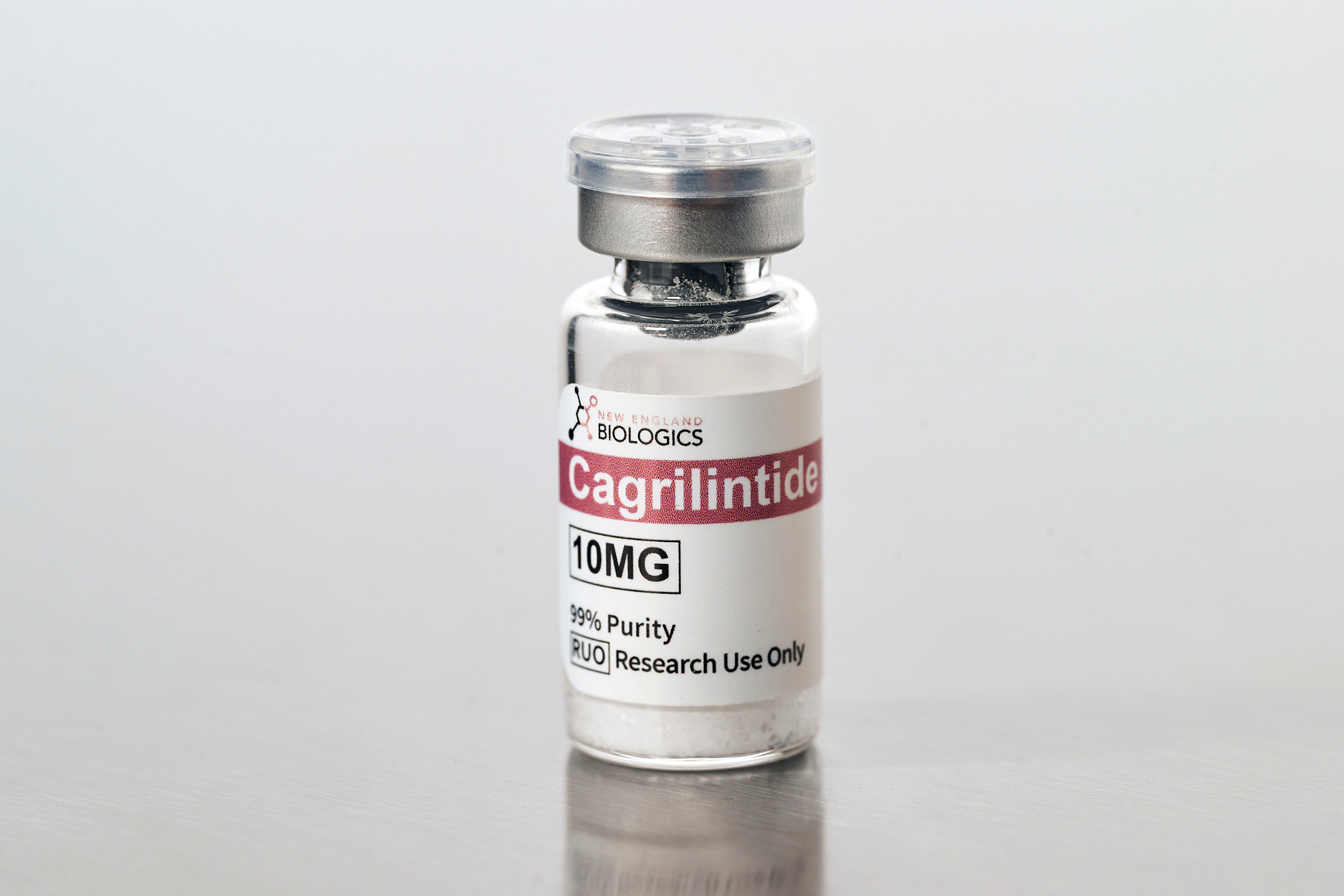
Cagrilintide (NN9838, formerly known as AM833) is a long-acting amylin analog developed by Novo Nordisk for the treatment of obesity. It is a synthetic peptide that mimics the effects of amylin, a hormone co-secreted with insulin from pancreatic beta cells that plays a role in glucose homeostasis and appetite regulation. Cagrilintide works by activating amylin […]
Normal Protocol
Advanced Protocol
Also Known As
NN9838, AM833, CagriSema component
Mechanism of Action
Product
Half-Life
Approximately 160 hours (once-weekly dosing), achieved through C18 fatty diacid acylation enabling reversible albumin binding.
Administration Routes
Dosing Protocols
Key Research Findings
Cagrilintide (NN9838, formerly known as AM833) is a long-acting amylin analog developed by Novo Nordisk for the treatment of obesity. It is a synthetic peptide that mimics the effects of amylin, a hormone co-secreted with insulin from pancreatic beta cells that plays a role in glucose homeostasis and appetite regulation.
Cagrilintide works by activating amylin receptors in the brain, particularly in the area postrema and nucleus tractus solitarius, to promote satiety and reduce food intake. It slows gastric emptying and suppresses postprandial glucagon secretion, contributing to improved glycemic control and weight management.
In clinical trials, cagrilintide has been studied both as a standalone treatment and in combination with semaglutide (the combination known as CagriSema). Phase 2 and Phase 3 trials have demonstrated significant weight loss — with the CagriSema combination showing up to 15-25% body weight reduction in some studies, exceeding results seen with either drug alone.
Cagrilintide is administered as a once-weekly subcutaneous injection due to its engineered long half-life achieved through fatty acid acylation, similar to the design approach used for semaglutide and liraglutide.
Side Effects & Warnings
Legal Status
Molecular Weight
Approximately 3950 g/mol
Amino Acid Sequence
Modified human amylin analog with amino acid substitutions and C18 fatty diacid acylation at Lys position for extended half-life.
Class
Research Status
Clinical TrialsHalf-Life
Approximately 160 hours (once-weekly dosing), achieved through C18 fatty diacid acylation enabling reversible albumin binding.
Routes
Category
GLP-1 Agonists