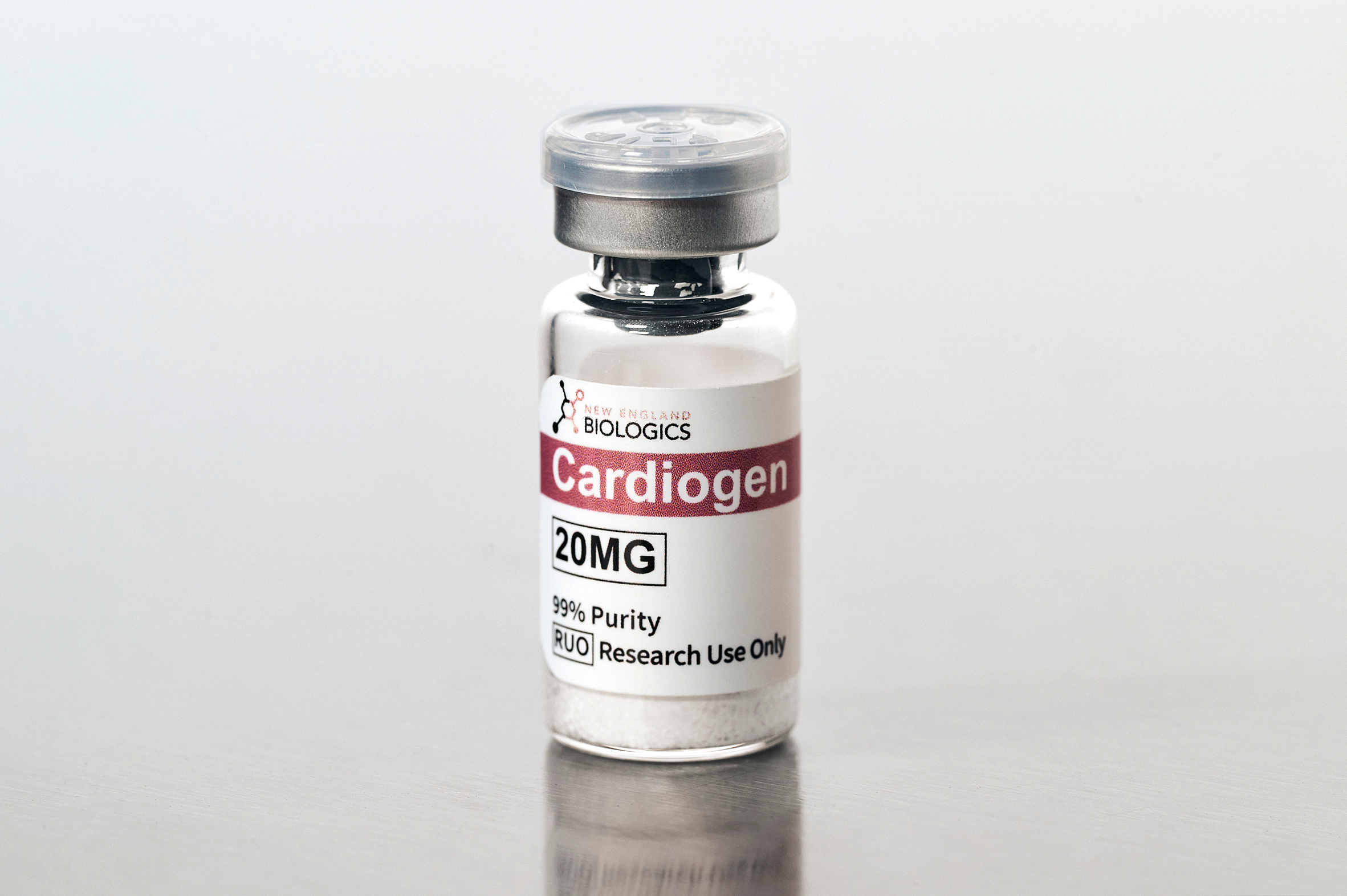
Cardiogen
Cardiogen is a Khavinson bioregulatory tetrapeptide (Ala-Glu-Asp-Arg) targeting cardiovascular tissue, with research suggesting it promotes cardiomyocyte repair, cardiac tissue regeneration, and normalization of heart function.
Normal Protocol
Advanced Protocol
Also Known As
Cardiogen peptide, Cardiac bioregulator peptide, Khavinson heart peptide
Mechanism of Action
Product
Half-Life
Not precisely established. Short peptides of this class are rapidly metabolized but proposed to exert lasting epigenetic effects beyond plasma half-life.
Administration Routes
Dosing Protocols
Key Research Findings
Cardiogen is a synthetic tetrapeptide bioregulator (Ala-Glu-Asp-Arg) developed by Professor Vladimir Khavinson and the St. Petersburg Institute of Bioregulation and Gerontology in Russia. It is a member of the Khavinson peptide family of short bioregulatory peptides, specifically designed to target cardiovascular tissue. Cardiogen functions as a bioregulator of the heart and vascular system, with research suggesting it promotes cardiomyocyte repair, supports cardiac tissue regeneration, and helps normalize heart function. Like other Khavinson peptides, it is proposed to work through direct interaction with DNA to modulate gene expression in cardiac cells.
Mechanism of Action
Cardiogen is theorized to act through the Khavinson bioregulatory mechanism, in which short peptides (2-4 amino acids) penetrate cell membranes and nuclear envelopes to bind complementary DNA sequences in gene promoter regions. In cardiac tissue, Cardiogen is proposed to regulate the expression of genes involved in cardiomyocyte differentiation, cardiac tissue repair, and vascular homeostasis.
Research has shown that Cardiogen stimulates the expression of transcription factors involved in cardiac differentiation, including factors associated with the formation of new cardiac muscle cells from stem cell precursors. The peptide has been studied for its effects on cardiac fibroblasts and cardiomyocytes, demonstrating the ability to promote differentiation of cardiac stem cells toward a functional cardiomyocyte phenotype. Cardiogen has also been shown to upregulate expression of Ki67 (a marker of cell proliferation) in cardiac tissue, suggesting it may support cardiac tissue renewal and repair processes.
Research Evidence
Khavinson et al. (2013, Bulletin of Experimental Biology and Medicine): demonstrated that Cardiogen stimulated differentiation of cardiac stem cells into cardiomyocytes in cell culture, with increased expression of cardiac-specific transcription factors. Khavinson et al. (2011): showed Cardiogen promoted expression of cardiac differentiation markers and Ki67 proliferation marker in heart tissue cultures from aged animals.
Linkova et al. (2016): reported that Cardiogen and other short peptides interact with specific DNA sequences, modulating gene expression in a tissue-specific manner. Animal studies from the St. Petersburg Institute have documented improved cardiac function parameters, including normalized electrocardiographic readings and improved contractility, in aged rats treated with Cardiogen over 2-4 week courses.
Clinical Applications
In Russian clinical practice, Cardiogen has been used to support cardiovascular health in aging populations, recovery from myocardial ischemia and infarction, age-related cardiac dysfunction, and as an adjunct in comprehensive cardiovascular treatment protocols. Russian clinicians have reported improvements in cardiac function parameters, exercise tolerance, and overall cardiovascular resilience when Cardiogen is incorporated into treatment regimens. Internationally, Cardiogen is of research interest for its potential to promote cardiac tissue repair through epigenetic mechanisms, an area of growing importance given the limited regenerative capacity of adult cardiac tissue.
Side Effects & Warnings
Legal Status
Molecular Weight
461.47 g/mol
Amino Acid Sequence
Ala-Glu-Asp-Arg (tetrapeptide)
Class
Research Status
PreclinicalHalf-Life
Not precisely established. Short peptides of this class are rapidly metabolized but proposed to exert lasting epigenetic effects beyond plasma half-life.
Routes