Chonluten
Chonluten is a Khavinson bioregulatory tripeptide (Glu-Asp-Gly) targeting respiratory and bronchopulmonary tissue, with research suggesting it supports bronchial epithelial function and promotes lung tissue repair.
Normal Protocol
Advanced Protocol
Also Known As
Chonluten peptide, Lung bioregulator peptide, Khavinson respiratory peptide, Bronchial bioregulator
Mechanism of Action
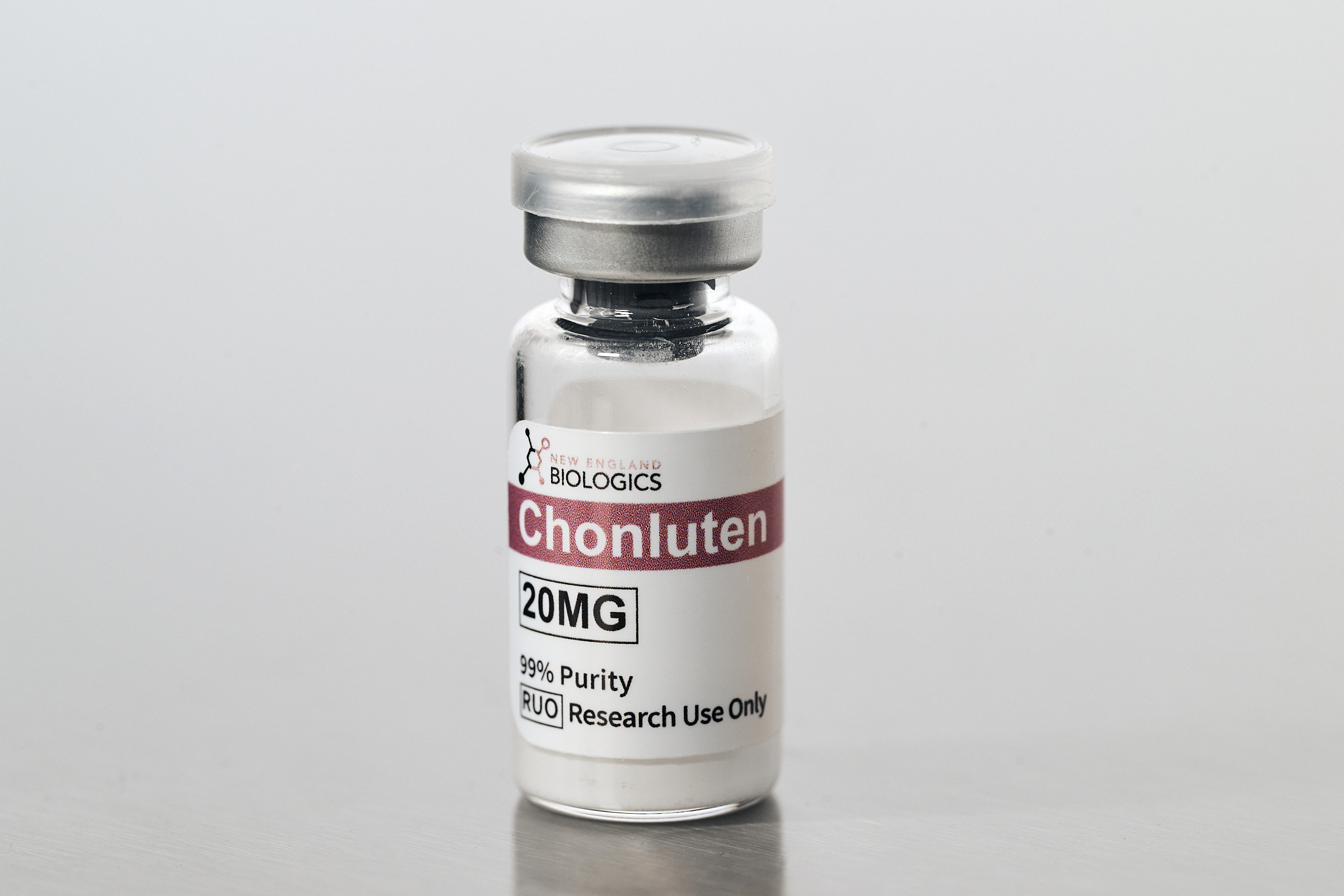
Product
Half-Life
Not precisely established. Short peptides of this class are rapidly metabolized but proposed to exert lasting epigenetic effects beyond plasma half-life.
Administration Routes
Dosing Protocols
Key Research Findings
Chonluten is a synthetic tripeptide bioregulator (Glu-Asp-Gly) developed by Professor Vladimir Khavinson and the St. Petersburg Institute of Bioregulation and Gerontology in Russia. It is a member of the Khavinson peptide family of short bioregulatory peptides, specifically designed to target respiratory and bronchopulmonary tissue. Chonluten functions as a bioregulator of the lungs and respiratory system, with research suggesting it supports bronchial epithelial cell function, promotes lung tissue repair, and helps normalize respiratory mucosal immunity. Like other Khavinson peptides, it is proposed to work through direct interaction with DNA to modulate gene expression in pulmonary cells.
Mechanism of Action
Chonluten is theorized to act through the Khavinson bioregulatory mechanism, in which short peptides penetrate cell membranes and nuclear envelopes to bind complementary DNA sequences in gene promoter regions of lung and bronchial tissue cells. In respiratory tissue, Chonluten is proposed to regulate expression of genes involved in bronchial epithelial differentiation, mucociliary function, and local immune defense.
Research suggests Chonluten modulates expression of genes related to surfactant production, bronchial epithelial repair, and the regulation of inflammatory mediators in pulmonary tissue. The peptide has been studied for its effects on bronchial epithelial cell cultures, demonstrating the ability to normalize cell proliferation rates and functional markers that decline with age. Chonluten also appears to influence expression of genes involved in mucosal immunity, including secretory immunoglobulins and antimicrobial peptides produced by respiratory epithelium, supporting the lung’s first-line defense against pathogens.
Research Evidence
Khavinson et al. (2011, Bulletin of Experimental Biology and Medicine): demonstrated that Chonluten regulated gene expression in bronchial epithelial cell cultures and promoted normalization of cell function markers. The tripeptide stimulated expression of differentiation markers in aging bronchial tissue cultures toward levels observed in younger tissue.
Khavinson et al. (2014): showed Chonluten improved respiratory function parameters in aged animal models, with treated animals demonstrating improved bronchial clearance and lung tissue morphology compared to untreated controls. Linkova et al. (2016): confirmed that the Glu-Asp-Gly sequence interacts with specific DNA regions in pulmonary cells, supporting the proposed epigenetic regulatory mechanism of action.
Clinical Applications
In Russian clinical practice, Chonluten has been used to support recovery from chronic obstructive pulmonary disease (COPD) and chronic bronchitis, age-related decline in respiratory function, rehabilitation following pneumonia and other pulmonary infections, and general respiratory bioregulation in aging populations. Russian clinicians have reported improvements in spirometric parameters, reduction in frequency of respiratory infections, and improved overall pulmonary function when Chonluten is incorporated into treatment protocols. Internationally, Chonluten is of research interest for its potential to support lung tissue repair through epigenetic mechanisms, a particularly relevant area given the aging lung’s vulnerability to environmental damage and declining regenerative capacity.
Side Effects & Warnings
Legal Status
Molecular Weight
305.24 g/mol
Amino Acid Sequence
Glu-Asp-Gly (tripeptide)
Class
Research Status
PreclinicalHalf-Life
Not precisely established. Short peptides of this class are rapidly metabolized but proposed to exert lasting epigenetic effects beyond plasma half-life.
Routes