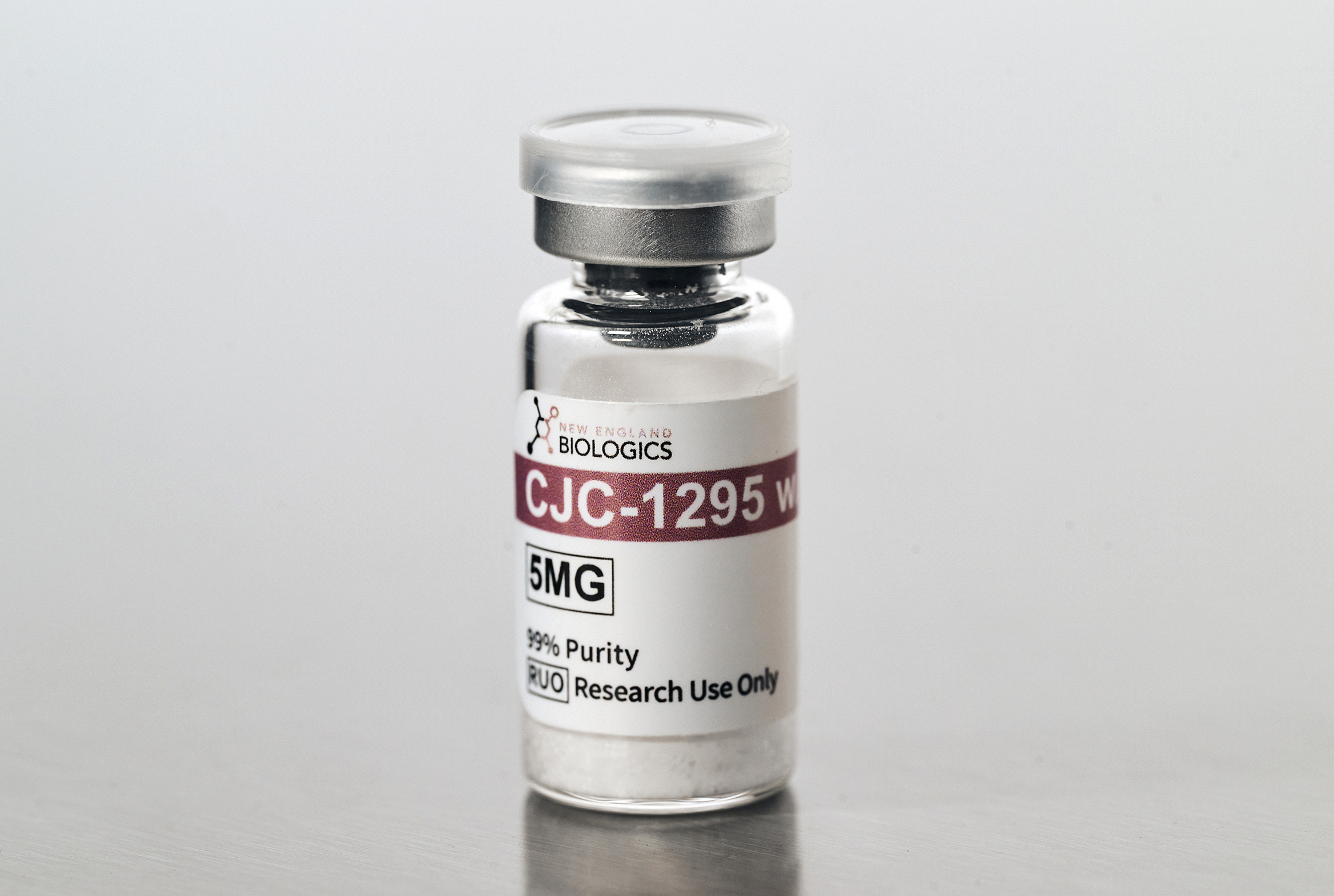
CJC-1295 DAC
A modified growth hormone-releasing hormone (GHRH) analog with a Drug Affinity Complex (DAC) that binds to albumin, extending its half-life from minutes to approximately 8 days. This allows for sustained GH elevation with once or twice weekly dosing, distinguishing it from non-DAC CJC-1295 (Mod GRF 1-29).
Normal Protocol
Advanced Protocol
Also Known As
CJC-1295 with DAC, DAC:GRF
Mechanism of Action
Product
Half-Life
~8 days
Administration Routes
Dosing Protocols
Key Research Findings
Overview
CJC-1295 DAC (Drug Affinity Complex) is a synthetic GHRH analog consisting of the first 29 amino acids of GHRH with four amino acid substitutions for enzymatic stability, plus a maleimidopropionic acid-lysine linker (DAC) that covalently binds to circulating albumin after injection. This albumin conjugation dramatically extends the half-life from ~30 minutes (non-DAC) to ~8 days, creating sustained growth hormone releasing hormone activity.
Mechanism of Action
CJC-1295 DAC binds to GHRH receptors on anterior pituitary somatotroph cells, stimulating growth hormone synthesis and release via cAMP/PKA signaling. The DAC technology keeps the peptide active for days, producing a continuous GH elevation rather than the pulsatile pattern seen with non-DAC versions. This sustained stimulation amplifies IGF-1 levels and produces a “GH bleed” — consistently elevated GH levels above baseline, as opposed to normal physiologic GH pulses.
Clinical Evidence
Phase 2 clinical trials by ConjuChem demonstrated dose-dependent increases in GH and IGF-1 levels lasting 6+ days after a single subcutaneous injection. At 30-60 mcg/kg, mean IGF-1 levels increased 1.5-3x above baseline and remained elevated for over a week. GH levels showed sustained elevation with maintained pulsatility, though pulse amplitude decreased over time. Clinical development was discontinued after ConjuChem ceased operations, but the compound became widely used in the peptide research community.
Dosing Protocols
Common research protocol: 2 mg subcutaneous injection once or twice weekly. Some protocols use 1 mg twice weekly. Due to the long half-life and sustained GH elevation, DAC version is not typically combined with GHRP peptides in the same way as Mod GRF (non-DAC CJC-1295), as the continuous GH release may blunt acute GH pulses. Best injected at bedtime to align with natural GH secretion patterns.
Side Effects
Injection site reactions (redness, swelling) are common due to the DAC-albumin binding reaction. Water retention and joint stiffness (from elevated GH/IGF-1). Tingling/numbness in extremities. Potential for GH-related effects with prolonged use: insulin resistance, carpal tunnel syndrome. The sustained GH elevation (vs pulsatile) is debated — some researchers argue continuous GH elevation may cause more side effects than pulsatile release.
Side Effects & Warnings
Legal Status
Class
Research Status
Clinical TrialsHalf-Life
~8 days
Routes
Category
Growth Hormone Peptides