DSIP (Delta Sleep-Inducing Peptide)
Naturally occurring nonapeptide that promotes delta (slow-wave) sleep without sedation. Normalizes disrupted sleep patterns, reduces stress hormones, and enhances restorative deep sleep.
Normal Protocol
Advanced Protocol
Also Known As
Delta Sleep Inducing Peptide, Deltaran, DSIP
Mechanism of Action
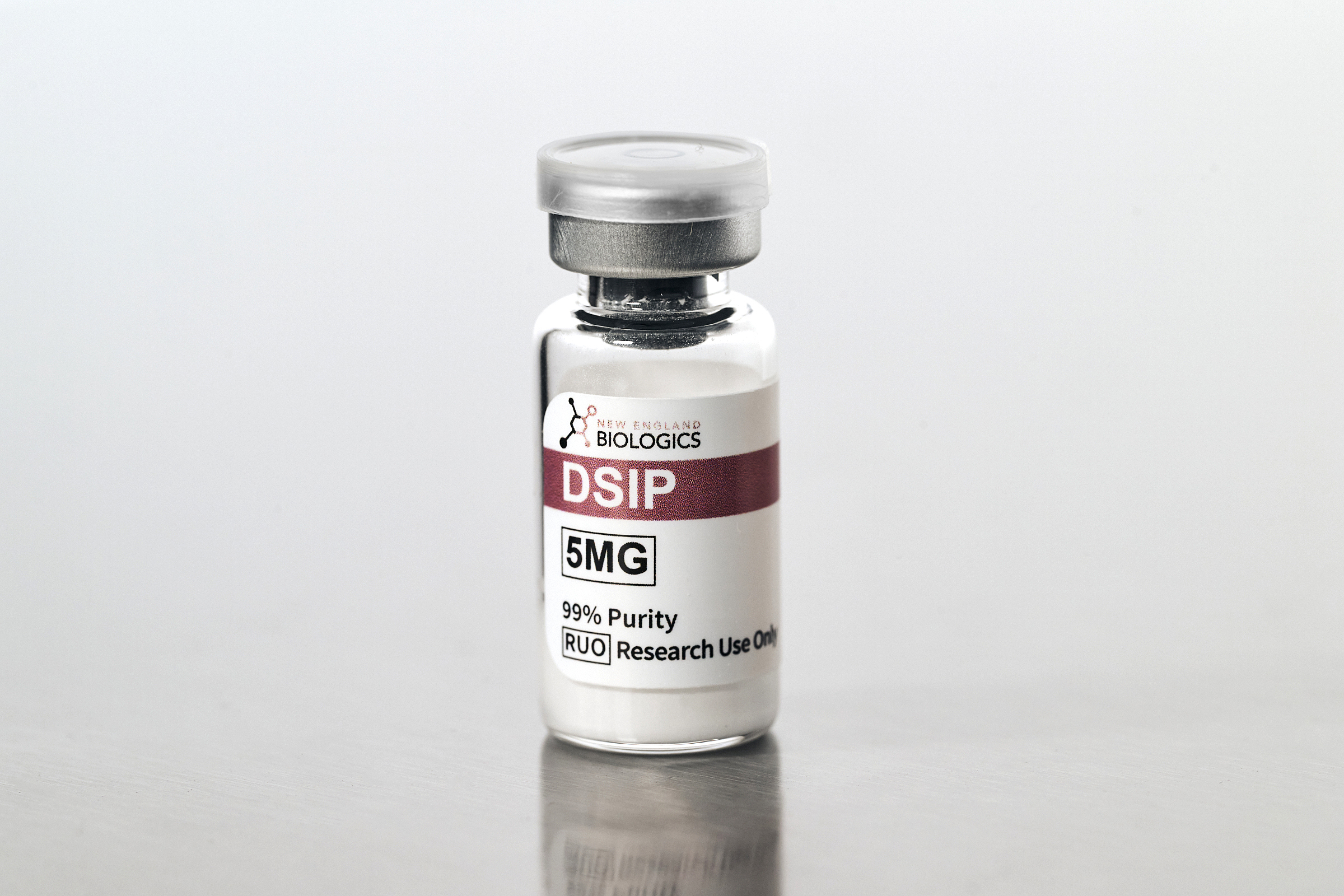
Product
Half-Life
Approximately 15 minutes (rapid enzymatic degradation); effects on sleep persist for hours
Administration Routes
Dosing Protocols
5 mg vial reconstituted with 2 mL bacteriostatic water (concentration: 2.5 mg/mL).
Draw 10 units (0.1 mL) on a 100-unit insulin syringe = 250 mcg per dose.
Inject subcutaneously once daily. Vial lasts 20 days.
Advanced Protocol:
5 mg vial reconstituted with 1 mL bacteriostatic water (concentration: 5 mg/mL).
Draw 10 units (0.1 mL) on a 100-unit insulin syringe = 500 mcg per dose.
Inject subcutaneously once daily. Vial lasts 10 days.
Key Research Findings
Delta Sleep-Inducing Peptide (DSIP) is a naturally occurring nonapeptide first isolated from rabbit brain during induced sleep by Schoenenberger and Monnier in 1977. It is one of the few peptides that directly modulates sleep architecture, specifically promoting delta (slow-wave) sleep — the deepest and most restorative sleep stage critical for growth hormone release, immune function, and memory consolidation.
Mechanism of Action
DSIP mechanism is multifaceted and not fully elucidated. It modulates GABAergic and glutamatergic neurotransmission, reduces somatostatin release (indirectly promoting GH secretion during sleep), modulates corticotropin (ACTH/cortisol) secretion, and influences the endogenous opioid system. It appears to act as a sleep-promoting neuromodulator rather than a sedative, normalizing disturbed sleep patterns without causing sedation or next-day impairment.
Research Evidence
Human clinical studies by Schneider-Helmert and Schoenenberger (1986) demonstrated that DSIP administration improved sleep quality in chronic insomniacs, with particular improvement in sleep onset latency and delta sleep duration. Studies have also shown stress-protective properties, with DSIP reducing stress-induced cortisol elevation and normalizing disrupted sleep patterns in stressed individuals. Additional research has explored analgesic properties and potential in withdrawal syndromes (alcohol, opioid).
Side Effects & Warnings
Legal Status
Molecular Weight
848.8 g/mol
Amino Acid Sequence
Trp-Ala-Gly-Gly-Asp-Ala-Ser-Gly-Glu
Class
Research Status
PreclinicalHalf-Life
Approximately 15 minutes (rapid enzymatic degradation); effects on sleep persist for hours
Routes
Category
Cognitive & Neuroprotective