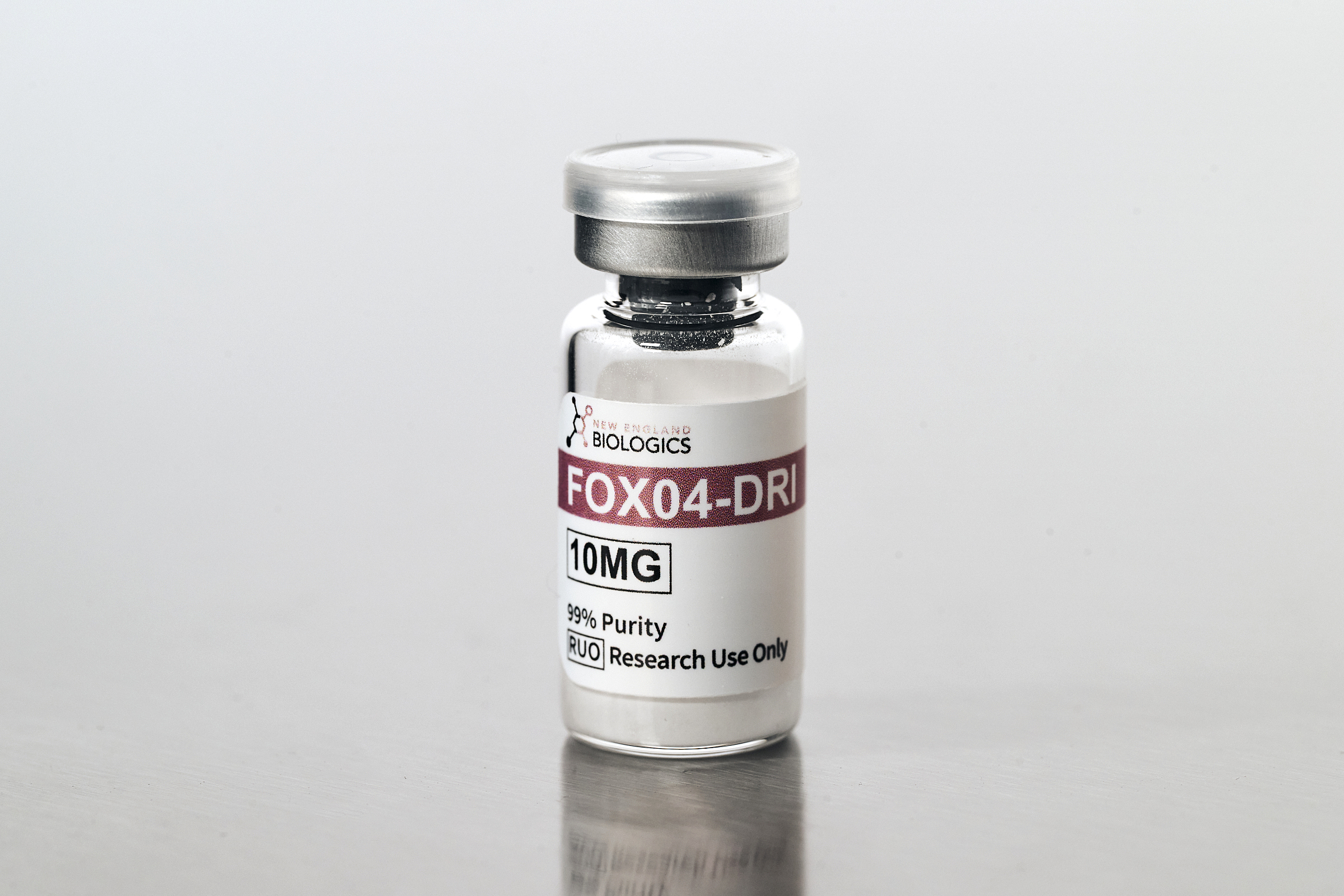
FOXO4-DRI
Senolytic peptide that selectively destroys senescent cells by disrupting FOXO4-p53 interaction. Demonstrated restoration of age-related decline in mouse models.
Also Known As
FOXO4-D-retro-inverso, Proxofim
Mechanism of Action
Product
Half-Life
Not well-characterized in published literature. D-retro-inverso modification confers protease resistance.
Administration Routes
Dosing Protocols
Key Research Findings
FOXO4-DRI is a cell-penetrating senolytic peptide developed by researchers at Erasmus University Medical Center in the Netherlands. It was designed to selectively induce apoptosis (programmed cell death) in senescent cells — aged, damaged cells that accumulate with age and drive chronic inflammation, tissue dysfunction, and age-related disease through the senescence-associated secretory phenotype (SASP).
Mechanism of Action
FOXO4-DRI works by disrupting the interaction between FOXO4 (Forkhead box O4) and p53, two transcription factors that cooperate to maintain senescent cell viability. In senescent cells, FOXO4 sequesters p53 in the nucleus, preventing p53 from triggering apoptosis. FOXO4-DRI is a D-retro-inverso peptide (mirror image, reversed sequence) that competitively interferes with this FOXO4-p53 interaction, freeing p53 to translocate to mitochondria and activate the intrinsic apoptotic pathway.
Critically, this mechanism is specific to senescent cells because non-senescent cells do not depend on the FOXO4-p53 interaction for survival. This selectivity is FOXO4-DRI primary advantage over other senolytic approaches.
Research Evidence
Baar et al. (2017), published in Cell, demonstrated that FOXO4-DRI selectively eliminated senescent cells in vitro and in vivo. In naturally aged mice, treatment restored fitness, fur density, and renal function. In fast-aging mice (XpdTTD/TTD model), FOXO4-DRI counteracted chemotoxicity-induced senescence and improved multiple age-related parameters.
The study showed that FOXO4-DRI-treated aged mice had improved performance on treadmill testing, restored kidney function markers, and visible improvements in coat condition. Importantly, the peptide did not affect non-senescent cells, supporting its selectivity profile.
Side Effects & Warnings
Legal Status
Molecular Weight
Approximately 3500 g/mol (D-retro-inverso peptide)
Amino Acid Sequence
D-retro-inverso version of FOXO4 p53-binding domain peptide
Class
Research Status
PreclinicalHalf-Life
Not well-characterized in published literature. D-retro-inverso modification confers protease resistance.
Routes
Category
Longevity & Anti-Aging