GHRP-2
Most potent GHRP for GH release per dose. Approved in Japan as diagnostic agent for GH deficiency. Stronger than GHRP-6 with less appetite stimulation.
Normal Protocol
Advanced Protocol
Also Known As
Pralmorelin, KP-102, GHRP Kaken 100, D-Ala-D-β-Nal-Ala-Trp-D-Phe-Lys-NH2
Mechanism of Action
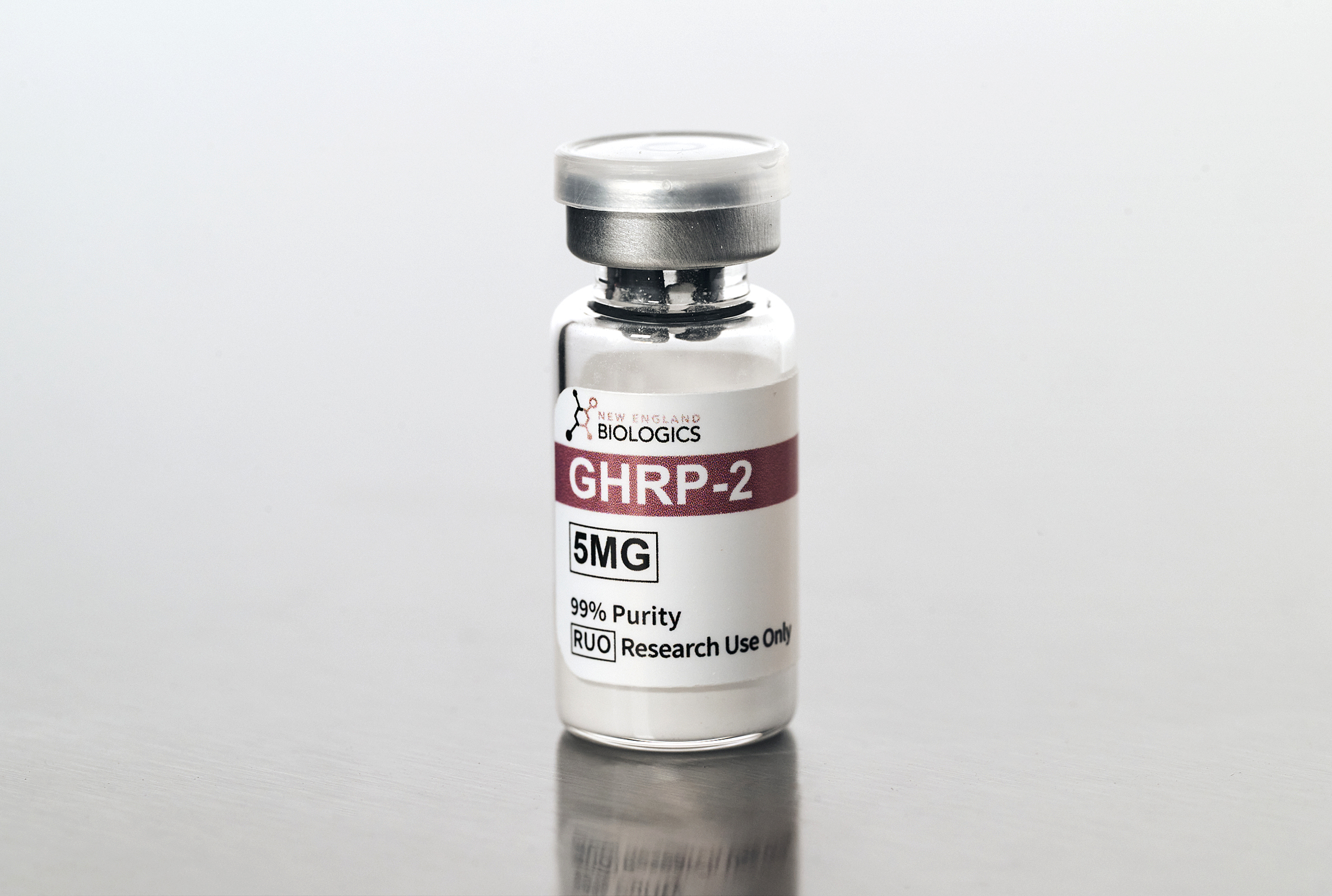
Product
Half-Life
15-60 minutes
Administration Routes
Dosing Protocols
Key Research Findings
GHRP-2 (Growth Hormone Releasing Peptide-2, pralmorelin) is a synthetic hexapeptide growth hormone secretagogue that is considered the most potent GHRP for GH release per unit dose. Developed as a second-generation improvement over GHRP-6, it offers stronger GH release with less appetite stimulation, though it is less selective than ipamorelin regarding cortisol and prolactin effects.
Mechanism of Action
GHRP-2 is a potent ghrelin receptor (GHS-R1a) agonist that stimulates growth hormone release from the anterior pituitary. It acts synergistically with GHRH (additive or supraadditive effects when co-administered). GHRP-2 also stimulates GH release through suppression of somatostatin, the endogenous GH release inhibitor, creating a dual stimulatory mechanism.
Compared to GHRP-6, GHRP-2 produces stronger GH release per microgram administered. Its appetite-stimulating effect is present but notably less pronounced than GHRP-6, while still greater than ipamorelin. Cortisol and prolactin increases occur in a dose-dependent manner, falling between GHRP-6 (higher) and ipamorelin (lower) in magnitude.
Clinical Evidence
GHRP-2 has been extensively studied in clinical settings, primarily as a diagnostic tool for growth hormone deficiency. It is approved in Japan (as pralmorelin, brand name GHRP Kaken 100) as a diagnostic agent for GH secretory capacity. The GHRP-2 stimulation test is considered one of the most reliable provocative tests for diagnosing GHD.
Bowers et al. showed that IV administration of GHRP-2 at 1 mcg/kg produces a robust, reproducible GH response that can differentiate GH-deficient patients from normal subjects with high sensitivity and specificity. Combination testing with GHRP-2 + GHRH is considered the gold standard provocative test in some endocrinology protocols.
Side Effects & Warnings
Legal Status
Molecular Weight
817.97 g/mol
Amino Acid Sequence
D-Ala-D-β-Nal-Ala-Trp-D-Phe-Lys-NH2
Class
Research Status
ApprovedHalf-Life
15-60 minutes
Routes
Category
Growth Hormone Peptides