GHRP-6
A synthetic hexapeptide growth hormone secretagogue with potent GH-releasing and appetite-stimulating properties through ghrelin receptor activation.
Normal Protocol
Advanced Protocol
Also Known As
Growth Hormone Releasing Peptide-6, His-D-Trp-Ala-Trp-D-Phe-Lys-NH2, SKF-110679
Mechanism of Action
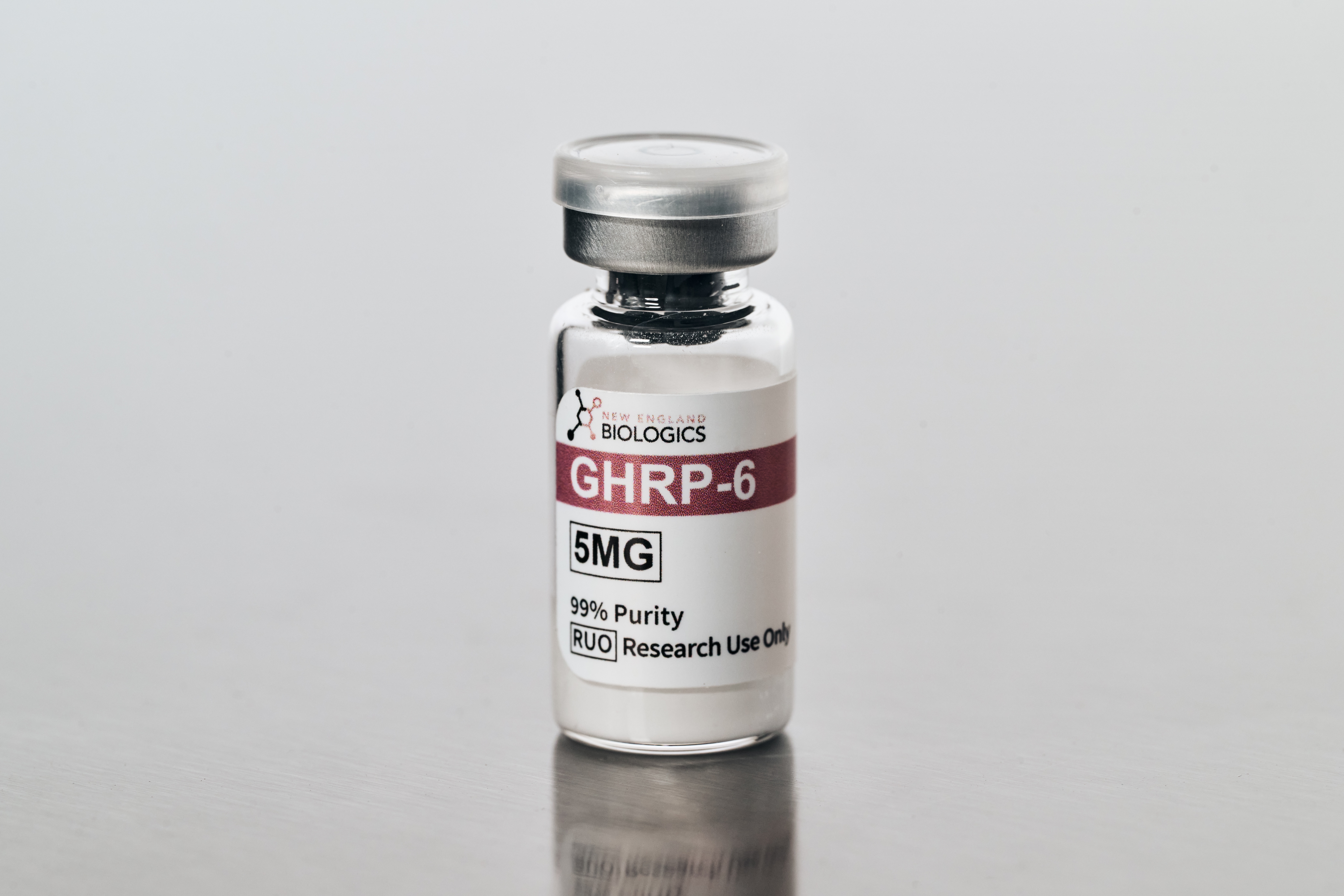
Product
Half-Life
15-60 minutes
Administration Routes
Dosing Protocols
Key Research Findings
GHRP-6 (Growth Hormone Releasing Peptide-6) is a synthetic hexapeptide that acts as a potent growth hormone secretagogue through activation of the ghrelin receptor (GHS-R1a). It was one of the first synthetic GHRPs developed and remains widely studied for its effects on GH release, appetite stimulation, and cytoprotective properties.
Mechanism of Action
GHRP-6 binds to the growth hormone secretagogue receptor (GHS-R1a) in the hypothalamus and pituitary gland, triggering growth hormone release through a pathway distinct from GHRH. It amplifies the natural pulsatile pattern of GH secretion and works synergistically with GHRH analogs. GHRP-6 also significantly stimulates appetite through ghrelin receptor activation and increases gastric motility.
Unlike more selective GHRPs, GHRP-6 causes notable increases in cortisol and prolactin at higher doses, and strongly stimulates appetite — effects mediated through its potent ghrelin mimetic activity.
Clinical Research
GHRP-6 has been extensively studied in human clinical trials. Bowers et al. demonstrated that GHRP-6 produces a dose-dependent GH response, with IV bolus doses of 1 mcg/kg producing significant GH release. Studies have shown the GH response is greater in younger subjects and diminishes with age. The peptide has also been studied for its cardioprotective effects, with research showing reduced infarct size in animal models of myocardial ischemia.
Appetite Effects
GHRP-6 is notable among GHRPs for its strong appetite-stimulating effects. This is a direct consequence of its potent ghrelin mimetic activity. Researchers should be aware that subjects may experience significant hunger 20-30 minutes after administration, which distinguishes it from more selective alternatives like ipamorelin.
Side Effects & Warnings
Legal Status
Molecular Weight
873.01 g/mol
Amino Acid Sequence
His-D-Trp-Ala-Trp-D-Phe-Lys-NH2
Class
Research Status
Clinical TrialsHalf-Life
15-60 minutes
Routes
Category
Growth Hormone Peptides