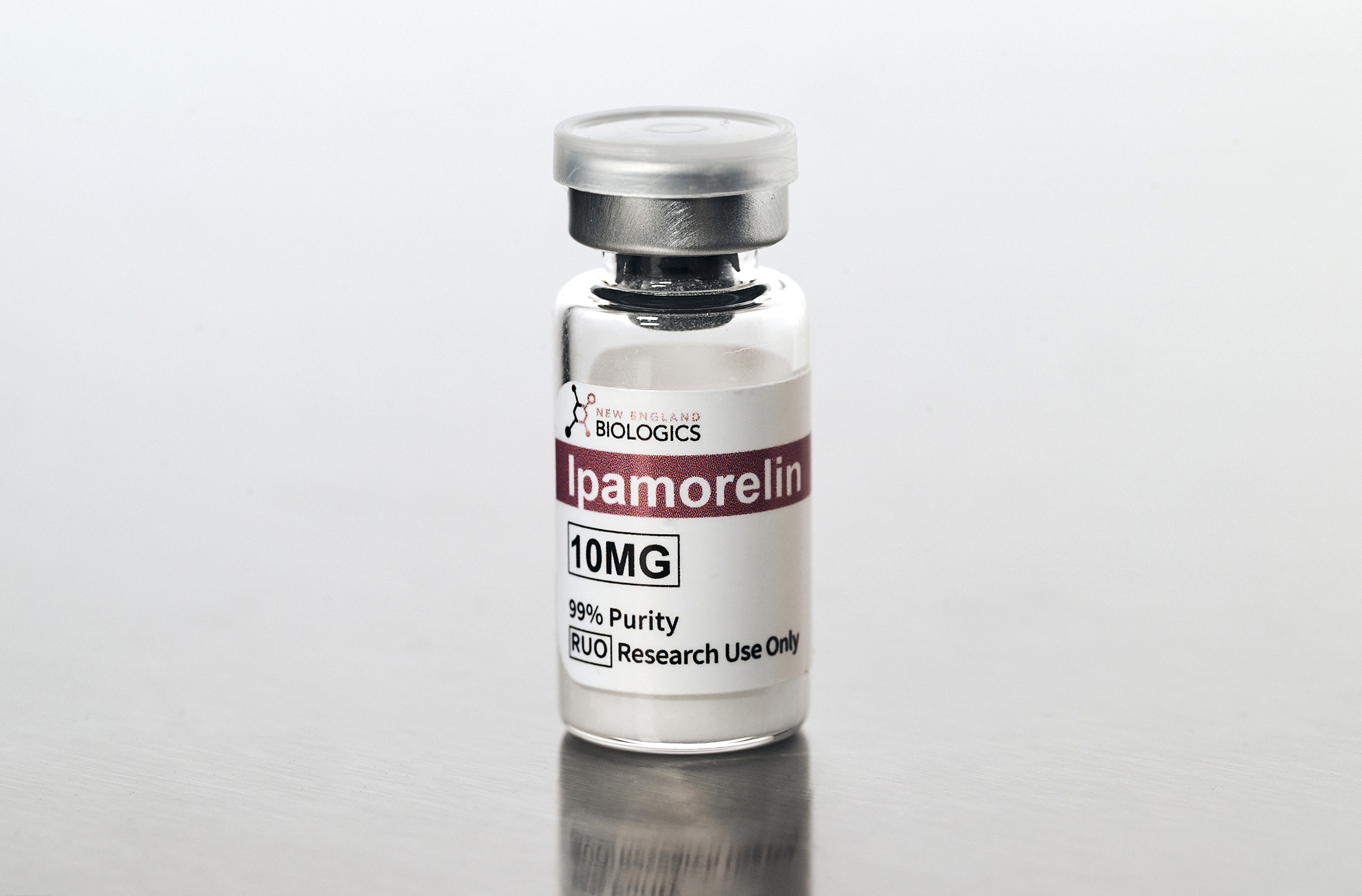
Ipamorelin
A highly selective growth hormone secretagogue that stimulates GH release without significantly affecting cortisol or prolactin levels.
Normal Protocol
Advanced Protocol
Also Known As
IPA, NNC 26-0161
Mechanism of Action
Product
Half-Life
Approximately 2 hours
Administration Routes
Dosing Protocols
Key Research Findings
Ipamorelin is a selective growth hormone secretagogue and ghrelin receptor agonist. It is considered one of the safest and most selective GH-releasing peptides, stimulating growth hormone release without significantly affecting cortisol, prolactin, or appetite.
Overview
Ipamorelin is a pentapeptide (five amino acids) that mimics ghrelin and binds to the ghrelin receptor (GHS-R) in the pituitary gland. Unlike other GHRPs, it does not cause significant increases in cortisol, acetylcholine, prolactin, or aldosterone at typical doses, making it highly selective for GH release.
Research Highlights
Clinical trials have demonstrated ipamorelin’s ability to increase GH secretion in a dose-dependent manner. It has been studied for post-surgical recovery, bone density improvement, and as a diagnostic tool for growth hormone deficiency.
Side Effects & Warnings
Legal Status
Molecular Weight
711.85 g/mol
Amino Acid Sequence
Aib-His-D-2-Nal-D-Phe-Lys-NH2
Class
Research Status
Clinical TrialsHalf-Life
Approximately 2 hours
Routes
Category
Growth Hormone Peptides