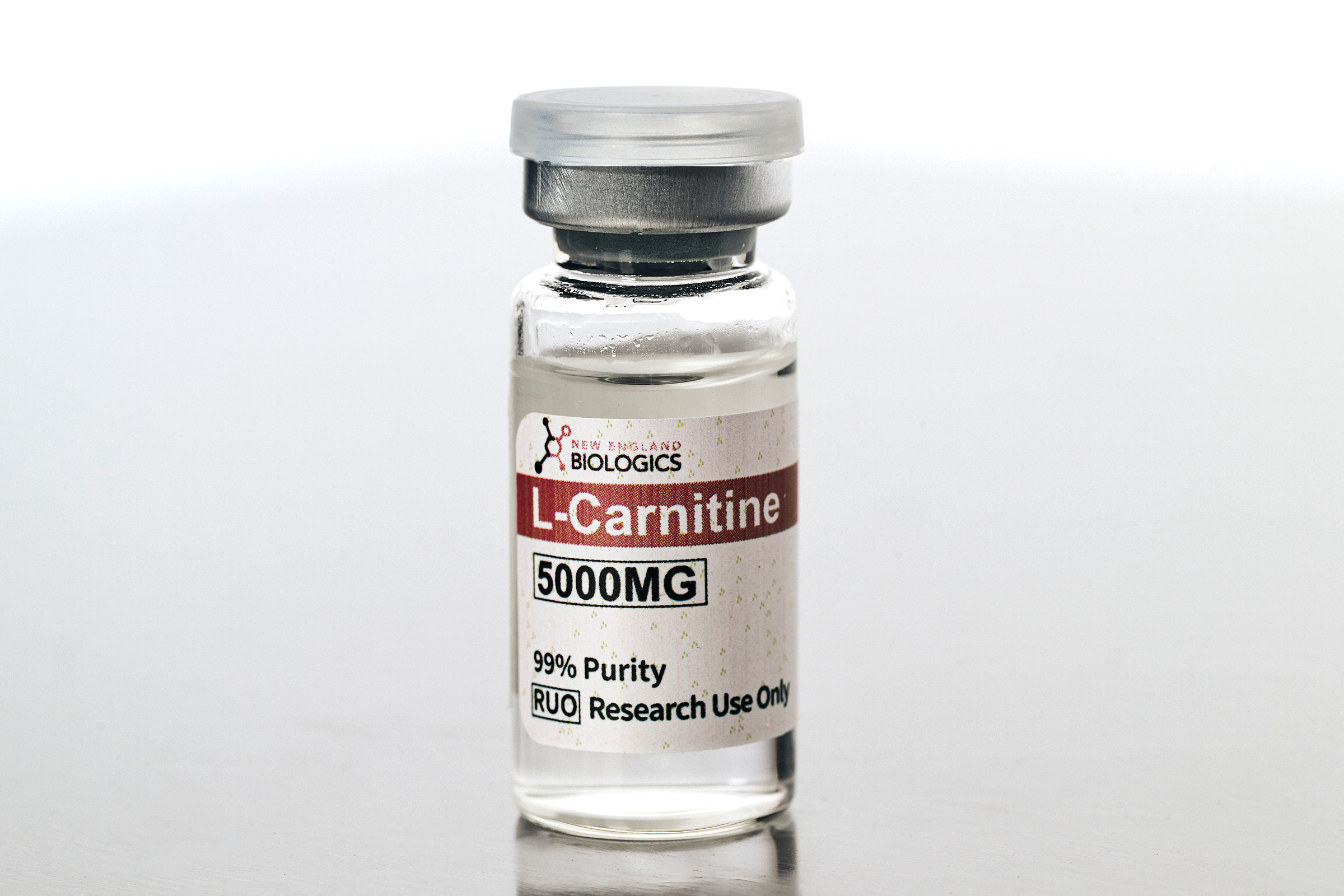
L-Carnitine
L-Carnitine (levocarnitine) is an amino acid derivative essential for transporting long-chain fatty acids into mitochondria for energy production. FDA-approved for carnitine deficiency and widely used in clinical wellness protocols for fat metabolism, exercise recovery, and mitochondrial support.
Also Known As
Levocarnitine, L-3-hydroxytrimethylaminobutanoate, Carnitor, Vitamin BT
Mechanism of Action
Product
Half-Life
2-4 hours (plasma). Tissue retention is longer, particularly in skeletal and cardiac muscle where carnitine concentrations are 50-200x higher than plasma.
Administration Routes
Dosing Protocols
Key Research Findings
L-Carnitine (levocarnitine) is a naturally occurring amino acid derivative synthesized from lysine and methionine in the liver and kidneys. As a quaternary ammonium compound, its primary biological role is the transport of long-chain fatty acids across the inner mitochondrial membrane for beta-oxidation, making it essential for cellular energy production. While technically not a peptide, L-Carnitine is widely used alongside peptide therapies in clinical wellness and longevity protocols due to its injectable formulations and synergistic metabolic effects.
Mechanism of Action
L-Carnitine functions as a substrate for carnitine palmitoyltransferase (CPT) enzymes located on the outer and inner mitochondrial membranes. CPT-I on the outer membrane converts long-chain acyl-CoA to acylcarnitine, which is then shuttled across the inner membrane by carnitine-acylcarnitine translocase. CPT-II on the inner membrane reconverts acylcarnitine to acyl-CoA for entry into the beta-oxidation pathway. This carnitine shuttle system is the rate-limiting step for long-chain fatty acid oxidation.
Beyond fatty acid transport, L-Carnitine modulates the intramitochondrial acyl-CoA/CoA ratio, buffering excess acyl groups that could otherwise inhibit key metabolic enzymes. It also facilitates the removal of short- and medium-chain fatty acids that accumulate as toxic intermediates, supports peroxisomal fatty acid oxidation, and has demonstrated antioxidant properties by reducing reactive oxygen species (ROS) production and protecting mitochondrial membrane integrity.
Research Evidence
Pooyandjoo et al. (2016, Obesity Reviews): systematic review and meta-analysis of 9 RCTs found L-Carnitine supplementation resulted in significant weight loss (weighted mean difference of -1.33 kg) compared to placebo, with greater effects at higher doses and longer durations.
Ruggenenti et al. (2009, Clinical Journal of the American Society of Nephrology): demonstrated that L-Carnitine improved insulin sensitivity and glucose disposal in patients at increased cardiovascular risk. DiNicolantonio et al. (2013, Mayo Clinic Proceedings): meta-analysis of 13 controlled trials (N=3,629) found L-Carnitine supplementation was associated with a 27% reduction in all-cause mortality and a 65% reduction in ventricular arrhythmias following acute myocardial infarction.
Malaguarnera et al. (2007, American Journal of Clinical Nutrition): RCT in centenarians showed L-Carnitine supplementation (2g/day) significantly reduced total fat mass, increased muscle mass, reduced fatigue, and improved cognitive function. Cruciani et al. (2012, Nutrition and Cancer): demonstrated that L-Carnitine (2g/day) improved cancer-related fatigue in patients with advanced disease and carnitine deficiency.
Clinical Applications
L-Carnitine has FDA-approved indications for primary and secondary carnitine deficiency and is used in hemodialysis patients to address dialysis-related carnitine depletion. In clinical wellness settings, injectable L-Carnitine is used to support fat metabolism, enhance exercise recovery, improve mitochondrial function, and reduce fatigue. It is frequently combined with other metabolic compounds in body composition optimization protocols.
The injectable form bypasses the relatively low oral bioavailability of L-Carnitine (approximately 14-18% for oral supplements versus near-complete absorption with intramuscular or intravenous administration), making it the preferred route in clinical protocols where higher tissue concentrations are desired.
Side Effects & Warnings
Legal Status
Molecular Weight
161.20 g/mol
Class
Half-Life
2-4 hours (plasma). Tissue retention is longer, particularly in skeletal and cardiac muscle where carnitine concentrations are 50-200x higher than plasma.
Routes