LL-37
The only human cathelicidin antimicrobial peptide. Broad-spectrum antimicrobial with wound healing, anti-biofilm, and immunomodulatory properties. Links vitamin D to innate immunity.
Normal Protocol
Advanced Protocol
Also Known As
Human Cathelicidin, hCAP18 active fragment, CAMP, FALL-39 (earlier nomenclature)
Mechanism of Action
Product
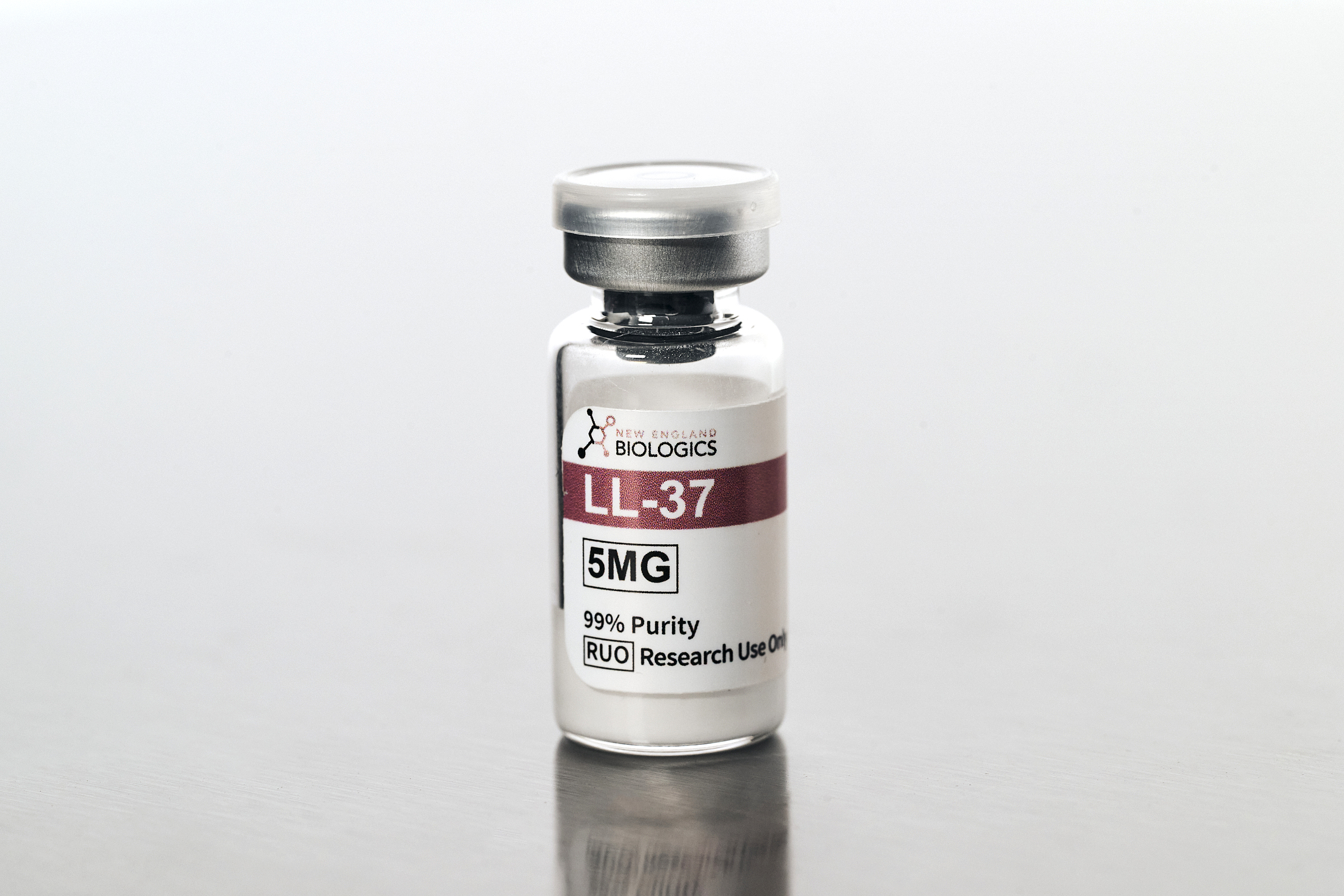
Half-Life
Short; rapidly degraded by proteases in serum (minutes to hours depending on environment)
Administration Routes
Dosing Protocols
Key Research Findings
LL-37 is the only cathelicidin antimicrobial peptide found in humans. It is the active C-terminal fragment of the human cathelicidin antimicrobial protein (hCAP18), cleaved to its mature 37-amino acid form by proteinase 3. LL-37 serves as a critical component of the innate immune system and represents the front line of host defense against microbial pathogens.
Mechanism of Action
LL-37 functions through multiple antimicrobial and immunomodulatory mechanisms. As a cationic amphipathic alpha-helical peptide, it directly disrupts microbial cell membranes through electrostatic interaction with negatively charged phospholipids, creating pores that lead to microbial cell death. It is effective against a broad spectrum of Gram-positive and Gram-negative bacteria, enveloped viruses, and fungi.
Beyond direct antimicrobial activity, LL-37 functions as an immune alarm signal. It recruits neutrophils, monocytes, and T cells to infection sites via formyl peptide receptor-like 1 (FPRL1). It promotes wound healing by stimulating keratinocyte migration and proliferation, induces angiogenesis, and modulates the adaptive immune response by influencing dendritic cell differentiation and cytokine production.
Clinical Research
LL-37 has been investigated for wound healing, with clinical trials examining topical application for chronic venous leg ulcers (Grönberg et al., 2014) showing improved healing rates. It has been studied for its anti-biofilm properties, particularly relevant for chronic wound infections and implant-associated infections. Research into intratumoral LL-37 injection for melanoma has shown local immune activation and tumor regression in Phase I/II trials (Mader et al., 2011). Its role in vitamin D-mediated immunity (vitamin D upregulates cathelicidin expression) has important implications for understanding seasonal infection susceptibility.
Side Effects & Warnings
Legal Status
Molecular Weight
4493.33 g/mol
Amino Acid Sequence
LLGDFFRKSKEKIGKEFKRIVQRIKDFLRNLVPRTES (37 amino acids)
Class
Research Status
Clinical TrialsHalf-Life
Short; rapidly degraded by proteases in serum (minutes to hours depending on environment)
Routes
Category
Immune & Thymic Peptides