MGF (Mechano Growth Factor)
Exercise-induced IGF-1 splice variant that activates muscle satellite (stem) cells. 25% muscle mass increase in 3 weeks in animal models. Declines with age.
Also Known As
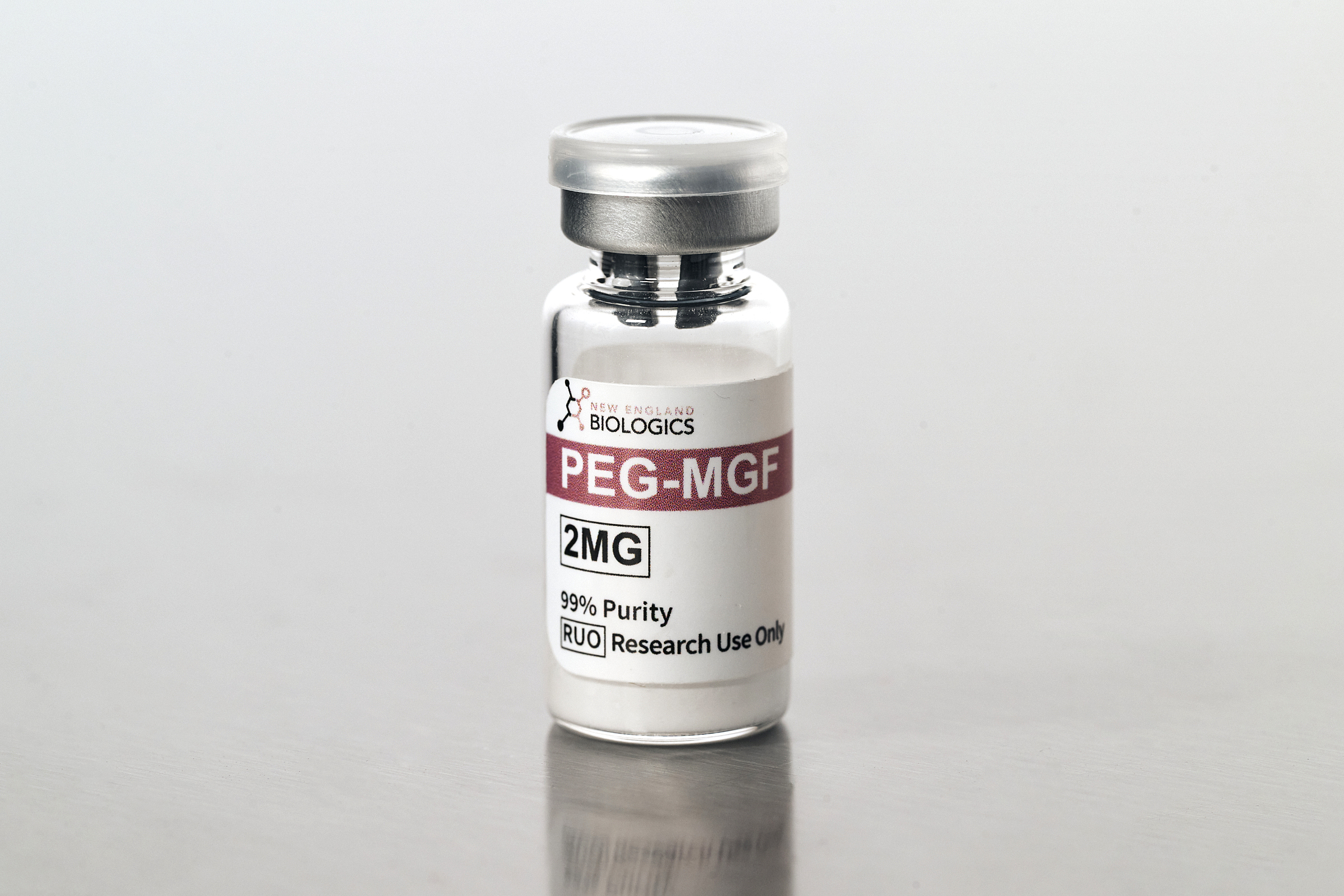
Mechano Growth Factor, IGF-1Ec, PEG-MGF (PEGylated form)
Mechanism of Action
Product
Half-Life
Minutes (unmodified). PEG-MGF: several days
Administration Routes
Dosing Protocols
Key Research Findings
Mechano Growth Factor (MGF) is a splice variant of IGF-1 (specifically IGF-1Ec in humans) that is produced locally in muscle tissue in response to mechanical stress such as resistance exercise. Unlike systemic IGF-1, MGF acts in an autocrine/paracrine fashion to activate muscle satellite cells — the stem cells responsible for muscle repair and hypertrophy.
Mechanism of Action
When muscle is subjected to mechanical loading or damage, the IGF-1 gene undergoes alternative splicing to produce MGF. The MGF E-peptide (the C-terminal extension unique to this splice variant) activates quiescent satellite cells, stimulating their proliferation and fusion with existing muscle fibers. This is distinct from mature IGF-1Ea, which primarily promotes differentiation rather than proliferation. PEG-MGF is a modified form with polyethylene glycol conjugation for extended half-life.
Research
Goldspink et al. first characterized MGF as an exercise-induced IGF-1 splice variant. Hill and Goldspink (2003) showed that intramuscular MGF injection produced a 25% increase in muscle mass within 3 weeks in animal models. Barton (2006) demonstrated that MGF activates satellite cells more effectively than mature IGF-1Ea. Age-related decline in MGF expression after exercise is documented and correlates with sarcopenia.
Side Effects & Warnings
Legal Status
Molecular Weight
Approximately 2867 g/mol (E-peptide)
Amino Acid Sequence
24-amino acid E-peptide from IGF-1Ec splice variant
Class
Research Status
PreclinicalHalf-Life
Minutes (unmodified). PEG-MGF: several days
Routes
Category
Performance & Body Composition