MOTS-c
Mitochondria-derived signaling peptide (mitokine) that activates AMPK, mimics exercise benefits, and improves metabolic homeostasis. Declines with age.
Also Known As
Mitochondrial ORF of the 12S rRNA type-c, Mitochondrial-Derived Peptide MOTS-c
Mechanism of Action
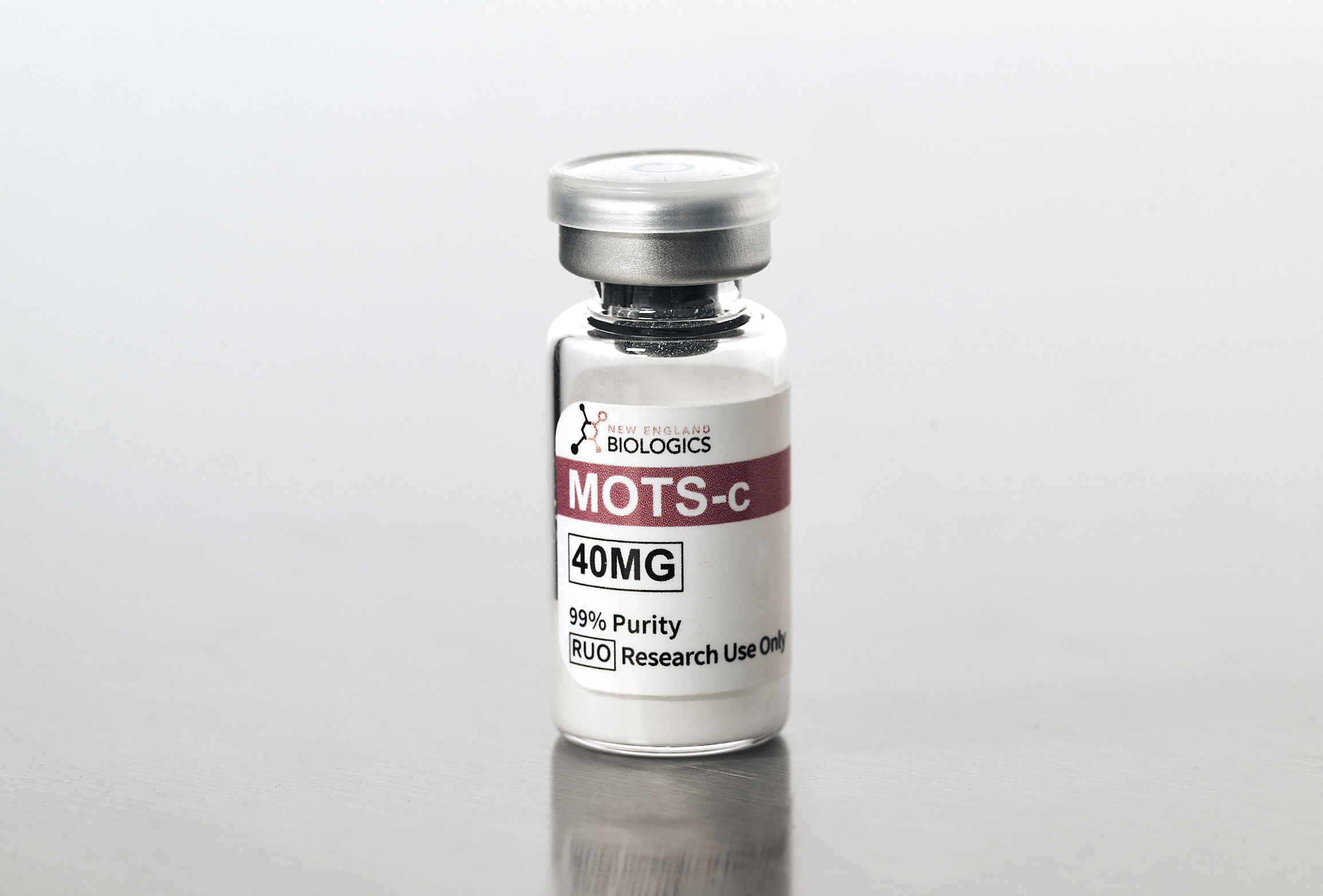
Product
Half-Life
Not precisely established. Active form appears stable in plasma for several hours.
Administration Routes
Dosing Protocols
Key Research Findings
MOTS-c (Mitochondrial Open Reading Frame of the Twelve S rRNA type-c) is a mitochondria-derived peptide (MDP) encoded within the mitochondrial genome. Discovered by Dr. Changhan David Lee at the University of Southern California in 2015, MOTS-c is one of the first identified signaling peptides encoded by mitochondrial DNA, challenging the traditional view that mitochondrial genes exclusively encode for oxidative phosphorylation components.
Mechanism of Action
MOTS-c acts as a mitochondrial-encoded hormone (mitokine) that regulates metabolic homeostasis. It activates AMPK (5-AMP-activated protein kinase), the master cellular energy sensor, promoting glucose uptake and fatty acid oxidation. MOTS-c translocates to the nucleus in response to metabolic stress, where it regulates nuclear gene expression related to antioxidant defense and metabolic adaptation.
During exercise, MOTS-c levels increase in skeletal muscle and plasma, suggesting it functions as an exercise-mimetic signaling molecule. It has been shown to improve insulin sensitivity, reduce obesity, and enhance exercise capacity in animal models. MOTS-c also regulates the folate-methionine cycle, linking mitochondrial function to epigenetic regulation.
Research Evidence
Lee et al. (2015, Cell Metabolism): discovery paper showing MOTS-c regulates insulin sensitivity and metabolic homeostasis through AMPK activation. Treatment of obese mice with MOTS-c reduced obesity, improved insulin resistance, and normalized glucose metabolism.
Reynolds et al. (2021): demonstrated MOTS-c improves physical performance in aged mice, with treated animals showing exercise capacity comparable to young mice. Kim et al. (2019): showed MOTS-c plasma levels decline with age and are higher in physically active individuals, supporting its role as an exercise-responsive mitokine.
Side Effects & Warnings
Legal Status
Molecular Weight
2174.69 g/mol
Amino Acid Sequence
MRWQEMGYIFYPRKLR (16 amino acids)
Class
Research Status
PreclinicalHalf-Life
Not precisely established. Active form appears stable in plasma for several hours.
Routes
Category
Longevity & Anti-Aging