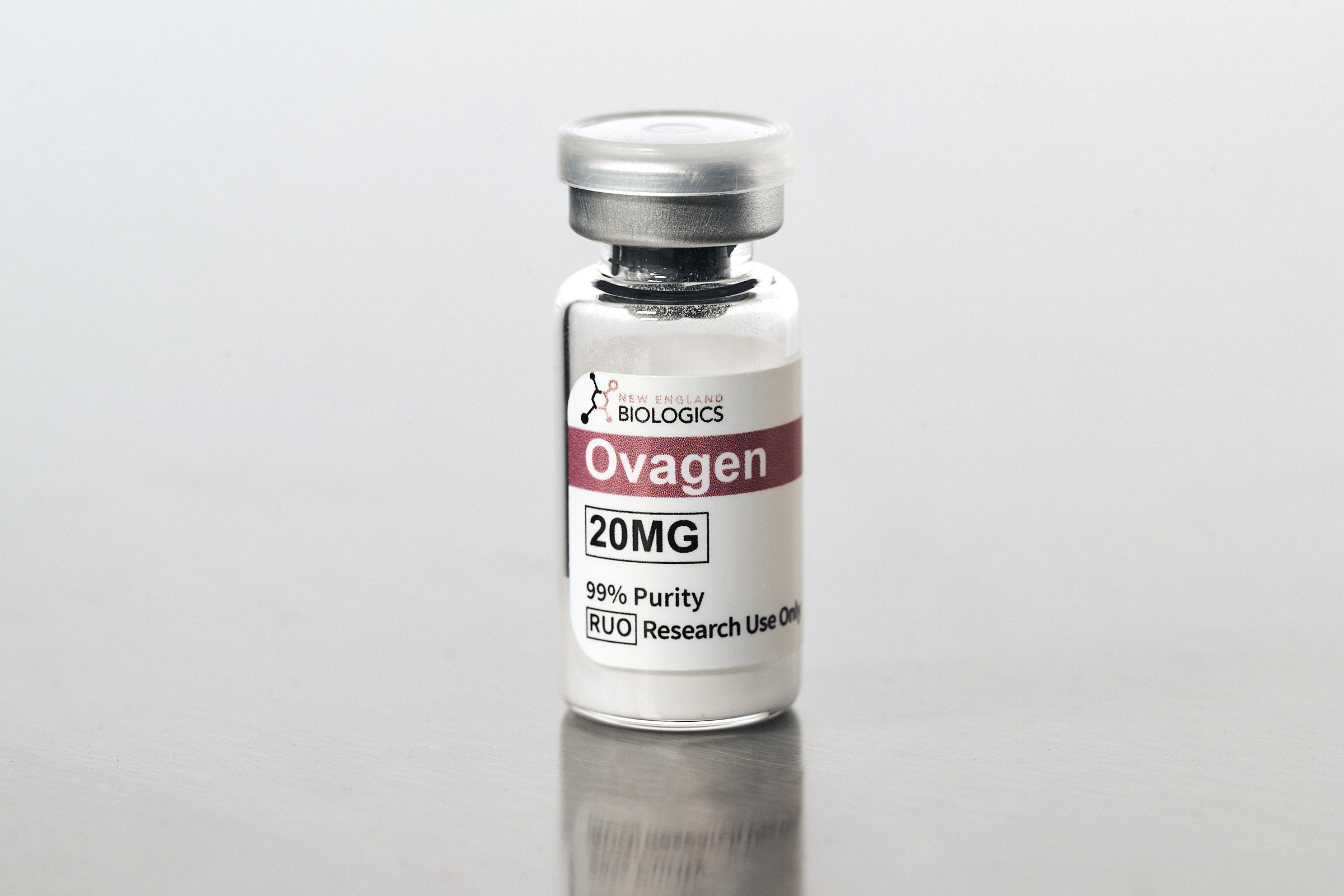
Ovagen
Ovagen is a bioregulator peptide consisting of the amino acids Glu-Asp-Leu, designed to support liver and gastrointestinal tract function. It belongs to the Khavinson peptide family of short synthetic peptides that target specific organ systems.
Also Known As
Glu-Asp-Leu
Mechanism of Action
Product
Half-Life
Short (minutes); effects are epigenetic and cumulative
Administration Routes
Dosing Protocols
Key Research Findings
What is Ovagen?
Ovagen is a short synthetic peptide bioregulator composed of three amino acids (Glu-Asp-Leu). Developed by Professor Vladimir Khavinson at the St. Petersburg Institute of Bioregulation and Gerontology, Ovagen is designed to normalize the function of the liver and gastrointestinal tract at the cellular level. Like other Khavinson peptides, it works through epigenetic mechanisms to restore gene expression patterns associated with healthy tissue function.
Mechanism of Action
Ovagen functions as a gene-regulating peptide that interacts with specific DNA sequences in hepatocytes (liver cells) and gastrointestinal epithelial cells. It modulates gene expression related to protein synthesis, cellular repair, and metabolic function within these tissues. The peptide helps restore optimal cellular function by influencing transcription factors and chromatin remodeling in liver and GI tract cells, promoting tissue regeneration and normalized metabolic activity.
Potential Benefits
- Liver support — May help normalize hepatocyte function and support liver regeneration
- GI tract health — Supports gastrointestinal epithelial cell renewal and function
- Detoxification — May enhance the liver’s natural detoxification pathways
- Metabolic support — Helps maintain healthy lipid and carbohydrate metabolism in the liver
- Hepatoprotective effects — May protect liver cells from damage caused by toxins and oxidative stress
Research Overview
Research on Ovagen has been conducted primarily at Russian bioregulation research institutes. Studies have investigated its effects on liver function markers, hepatocyte regeneration, and gastrointestinal health. In animal models, Ovagen has shown potential to improve liver function in cases of toxic damage and age-related decline. Clinical observations have noted improvements in liver enzyme levels and digestive function in patients receiving Ovagen as part of bioregulatory therapy protocols.
Administration
Ovagen is reconstituted with 2ml of bacteriostatic water. Using an insulin syringe marked 1-100 units, draw 20 units for a daily dose of 2mg. One 20mg vial provides 10 days of dosing. Administered subcutaneously.
Side Effects & Warnings
Legal Status
Class
Research Status
Clinical TrialsHalf-Life
Short (minutes); effects are epigenetic and cumulative
Routes
Category
Longevity & Anti-Aging