Oxytocin
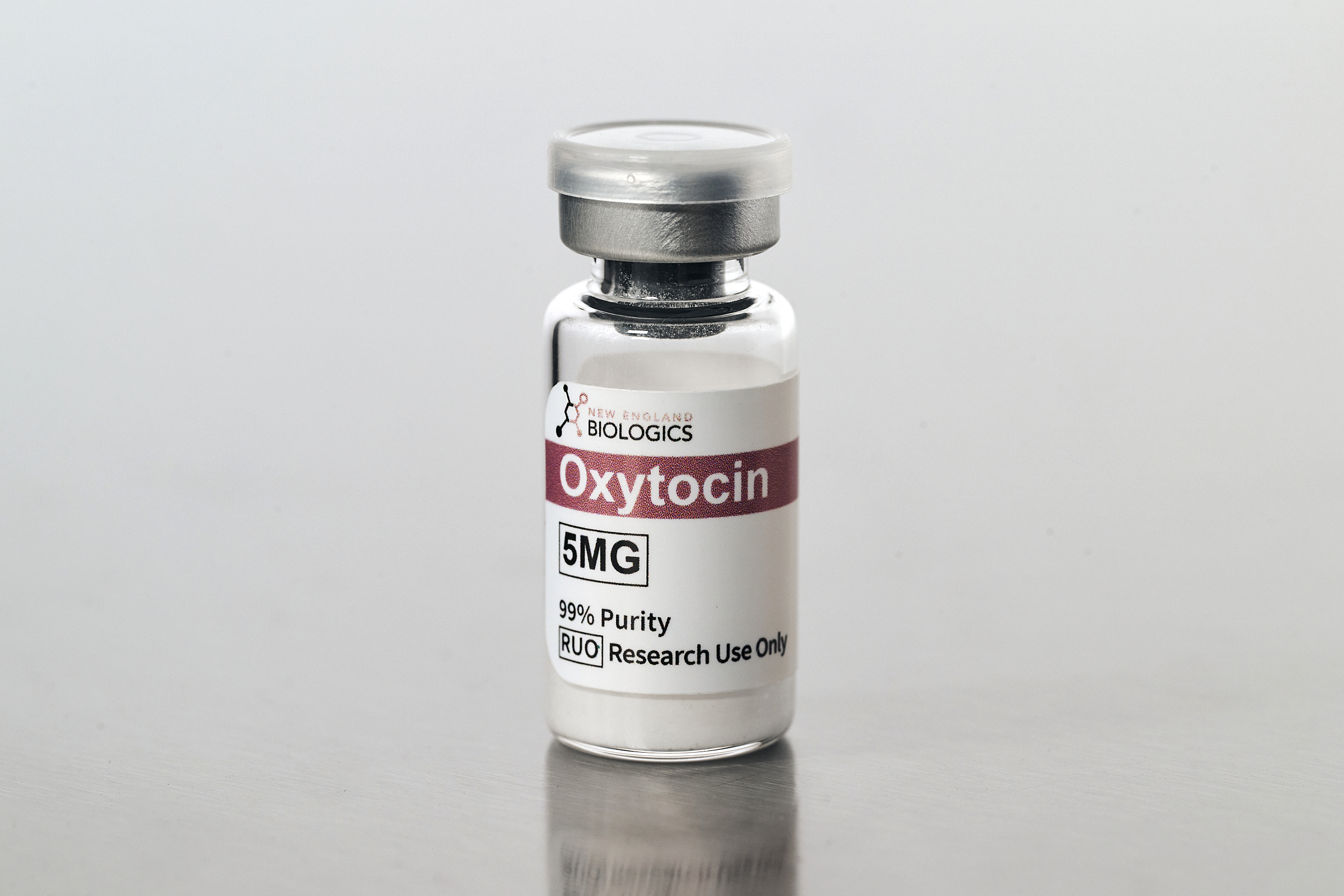
A naturally occurring neuropeptide hormone produced in the hypothalamus. Known as the “bonding hormone,” oxytocin plays critical roles in social behavior, stress regulation, wound healing, and metabolic function. It is used clinically for labor induction and has emerging applications in autism, PTSD, and social anxiety.
Also Known As
Pitocin, Syntocinon, OT
Mechanism of Action
Product
Half-Life
3-5 minutes (IV); ~30 minutes (intranasal effective duration)
Administration Routes
Dosing Protocols
Key Research Findings
Overview
Oxytocin is a nine-amino-acid peptide hormone (Cys-Tyr-Ile-Gln-Asn-Cys-Pro-Leu-Gly-NH2) with a disulfide bridge between the two cysteine residues. Produced primarily in the paraventricular and supraoptic nuclei of the hypothalamus, it acts both as a hormone (released into blood from the posterior pituitary) and as a neurotransmitter (released at synapses within the brain). It has wide-ranging effects on social cognition, stress response, inflammation, and tissue repair.
Mechanism of Action
Oxytocin binds to the oxytocin receptor (OXTR), a G-protein coupled receptor expressed throughout the brain and peripheral tissues. In the brain, it modulates the amygdala (reducing fear/anxiety), enhances social salience processing, and interacts with the dopaminergic reward system. Peripherally, it stimulates uterine smooth muscle contraction, promotes milk ejection, reduces cortisol levels, has anti-inflammatory effects (reduces IL-6, TNF-α), and accelerates wound healing by promoting fibroblast migration.
Clinical Evidence
FDA-approved for labor induction (Pitocin) and postpartum hemorrhage. Intranasal oxytocin research shows promise in autism spectrum disorder (improved social cognition in several RCTs), PTSD (enhanced fear extinction when combined with therapy), social anxiety disorder, and schizophrenia (reduced negative symptoms). Studies also demonstrate anxiolytic effects, reduced stress reactivity, and improved wound healing. Mixed results in some social cognition studies suggest effects may be context-dependent.
Dosing Protocols
Intranasal (research/off-label): 20-40 IU (international units) per administration, typically 1-2 times daily. Labor induction (IV): 0.5-2 mU/min escalated by 1-2 mU every 30-40 minutes. Research protocols often use single-dose 24 IU intranasal 45 minutes before social tasks. Sublingual and intranasal are preferred for CNS effects as these routes partially bypass the blood-brain barrier.
Side Effects
Intranasal: generally well-tolerated — nasal irritation, occasional headache, drowsiness. IV (obstetric): uterine hyperstimulation, water intoxication (at high doses due to ADH-like activity), hypotension, nausea. Chronic high-dose use may lead to receptor desensitization. Context-dependent social effects: in some studies, oxytocin increased in-group favoritism or defensive aggression in threat contexts.
Side Effects & Warnings
Legal Status
Molecular Weight
1007.19 Da
Amino Acid Sequence
Cys-Tyr-Ile-Gln-Asn-Cys-Pro-Leu-Gly-NH2 (disulfide bridge Cys1-Cys6)
Class
Research Status
ApprovedHalf-Life
3-5 minutes (IV); ~30 minutes (intranasal effective duration)
Routes
Category
Cognitive & Neuroprotective