PEG-MGF (PEGylated Mechano Growth Factor)
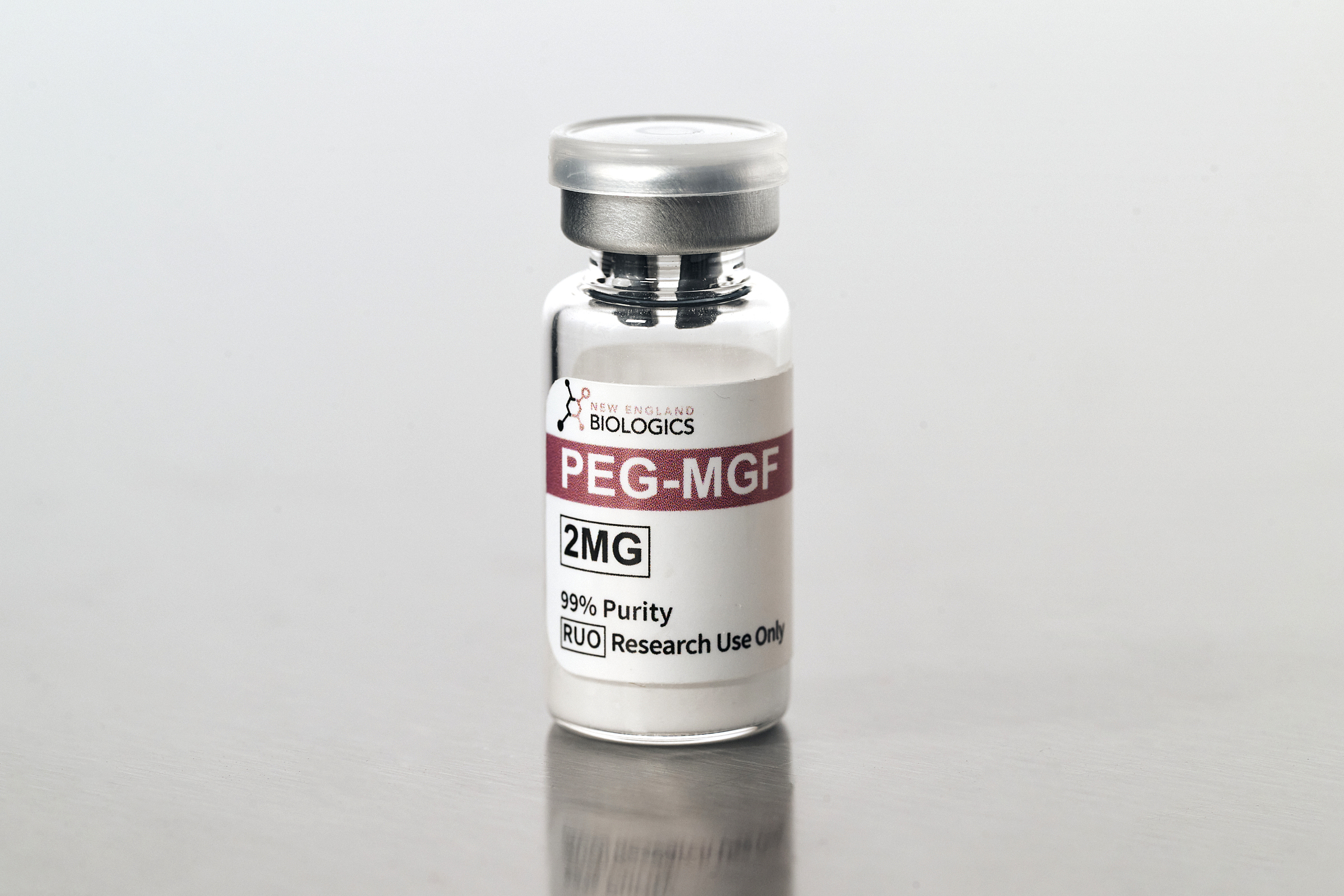
PEG-MGF is a PEGylated form of Mechano Growth Factor, a splice variant of IGF-1 released in response to muscle damage. The PEGylation extends its half-life, making it more effective for muscle repair, growth, and recovery.
Also Known As
PEGylated Mechano Growth Factor, PEGylated MGF, PEG-MGF
Mechanism of Action
Product
Half-Life
Several hours (PEGylated form vs minutes for standard MGF)
Administration Routes
Dosing Protocols
Key Research Findings
What is PEG-MGF?
PEG-MGF (PEGylated Mechano Growth Factor) is a modified version of MGF (Mechano Growth Factor), which is itself a splice variant of IGF-1 (Insulin-like Growth Factor 1). MGF is naturally produced by muscle tissue in response to mechanical stress such as resistance training. The PEGylation process attaches a polyethylene glycol molecule to MGF, significantly extending its biological half-life from minutes to hours, allowing for more sustained muscle-building and repair signaling.
Mechanism of Action
PEG-MGF activates muscle satellite cells (muscle stem cells) that are essential for muscle repair and hypertrophy. When muscle tissue is damaged through exercise, MGF is naturally released to initiate repair. PEG-MGF mimics and extends this process by binding to IGF-1 receptors on satellite cells, stimulating their proliferation and differentiation into new muscle fibers. The PEGylation prevents rapid degradation, allowing the peptide to circulate longer and recruit more satellite cells to damaged areas.
Potential Benefits
- Muscle repair — Accelerates recovery from exercise-induced muscle damage by activating satellite cells
- Muscle growth — Promotes hypertrophy through increased satellite cell proliferation and fusion
- Extended half-life — PEGylation provides sustained activity compared to standard MGF
- Recovery enhancement — May reduce recovery time between training sessions
- Injury recovery — Potential to support recovery from muscle and tendon injuries
Research Overview
Research on MGF and PEG-MGF has demonstrated significant effects on muscle satellite cell activation and muscle regeneration in animal models. Studies have shown that MGF can increase satellite cell proliferation by up to 25% compared to mature IGF-1. The PEGylated form has been shown to maintain biological activity for significantly longer periods. Research continues into applications for muscle wasting conditions, sarcopenia, and injury recovery.
Administration
PEG-MGF is reconstituted with 1ml of bacteriostatic water. Using an insulin syringe marked 1-100 units, draw 10 units for a single dose. One 2mg vial provides 10 doses. Best administered post-workout into the muscle group trained. Administered intramuscularly or subcutaneously.
Side Effects & Warnings
Legal Status
Molecular Weight
Approximately 2,867 Da (peptide) + PEG moiety
Class
Research Status
PreclinicalHalf-Life
Several hours (PEGylated form vs minutes for standard MGF)
Routes
Category
Growth Hormone Peptides