PT-141 (Bremelanotide)
FDA-approved (Vyleesi®) melanocortin agonist for female hypoactive sexual desire disorder. Works through central MC4R pathway to increase sexual desire, not just arousal.
Also Known As
Bremelanotide, Vyleesi, BMT-141, Palatin Technologies PT-141
Mechanism of Action
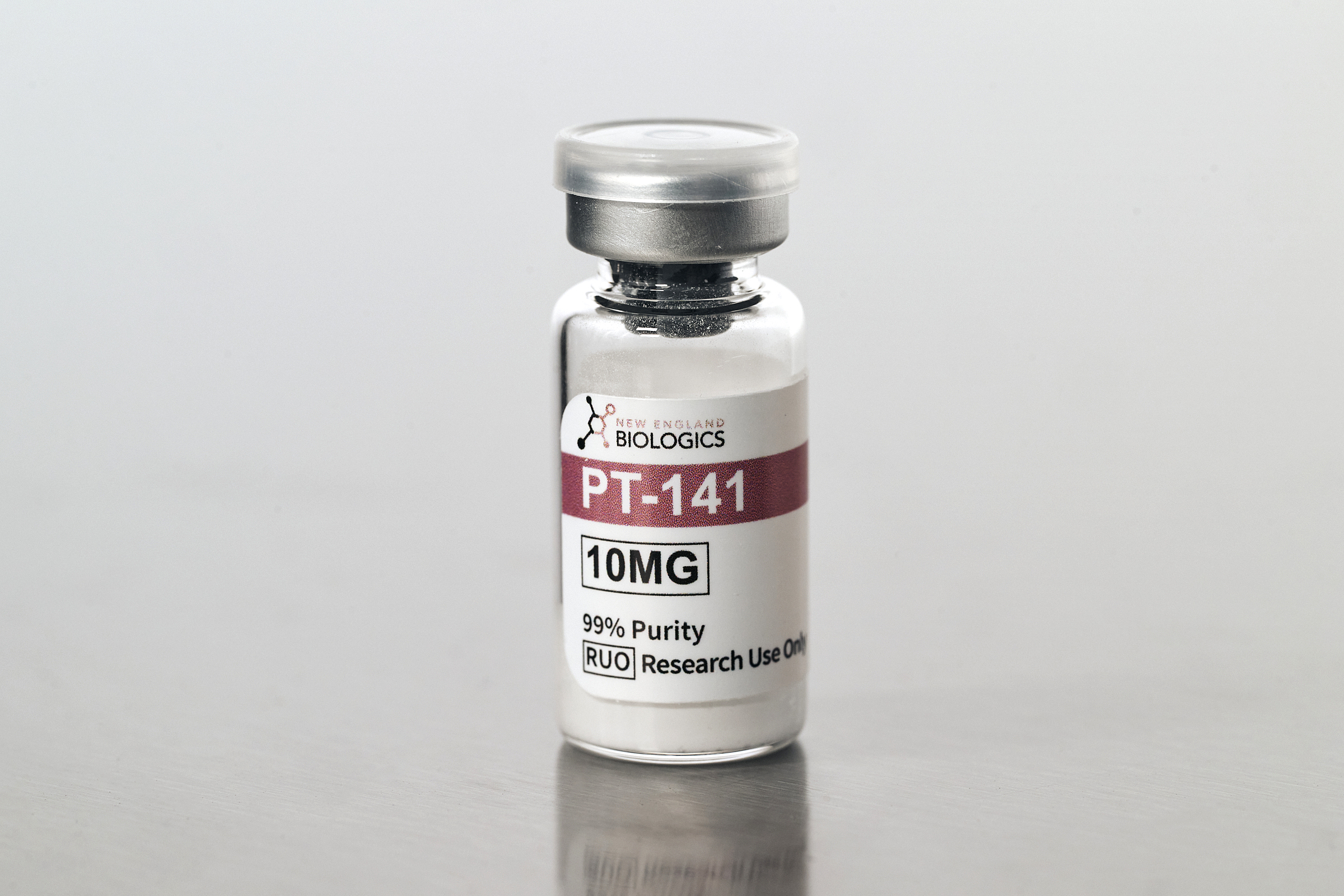
Product
Half-Life
Approximately 2.7 hours
Administration Routes
Dosing Protocols
Key Research Findings
PT-141, marketed as Vyleesi® (bremelanotide), is a synthetic cyclic heptapeptide melanocortin receptor agonist and the first FDA-approved on-demand treatment for hypoactive sexual desire disorder (HSDD) in premenopausal women. It was derived from Melanotan II and specifically developed to target sexual dysfunction through central melanocortin pathways.
Mechanism of Action
Bremelanotide acts primarily on MC4R (melanocortin-4 receptor) in the central nervous system, particularly in hypothalamic areas involved in sexual desire, arousal, and reward. Unlike phosphodiesterase-5 inhibitors (e.g., sildenafil) which act on vascular smooth muscle, bremelanotide works through a central neurological mechanism, directly influencing sexual desire rather than just the mechanical aspects of sexual function.
MC4R activation in the hypothalamus modulates dopaminergic and oxytocinergic pathways involved in sexual motivation and arousal. This mechanism makes it effective for desire-based sexual dysfunction — a category of conditions that was previously untreatable with existing pharmacotherapy.
Clinical Evidence
FDA approval was based on the RECONNECT Phase III program, consisting of two randomized, double-blind, placebo-controlled trials enrolling over 1,200 premenopausal women with HSDD. Treatment with bremelanotide 1.75 mg subcutaneous (self-administered at least 45 minutes before anticipated sexual activity) resulted in statistically significant increases in sexual desire (measured by FSDS-DAO desire domain score) and reductions in distress related to low sexual desire compared to placebo.
Kingsberg et al. (2019, Obstetrics & Gynecology) reported the pivotal trial results: 35% of bremelanotide-treated patients experienced clinically meaningful improvement in desire versus 31% with placebo. While the absolute difference was modest, the mechanism represents a novel approach to a condition with no prior approved treatments.
Male sexual dysfunction studies showed efficacy for erectile dysfunction in Phase II trials, though development focused on the female HSDD indication.
Side Effects & Warnings
Legal Status
Molecular Weight
1025.18 g/mol
Amino Acid Sequence
Ac-Nle-cyclo[Asp-His-D-Phe-Arg-Trp-Lys]-OH (differs from MT-II by C-terminal hydroxyl instead of amide)
Class
Research Status
ApprovedHalf-Life
Approximately 2.7 hours
Routes
Category
Skin & Cosmetic Peptides