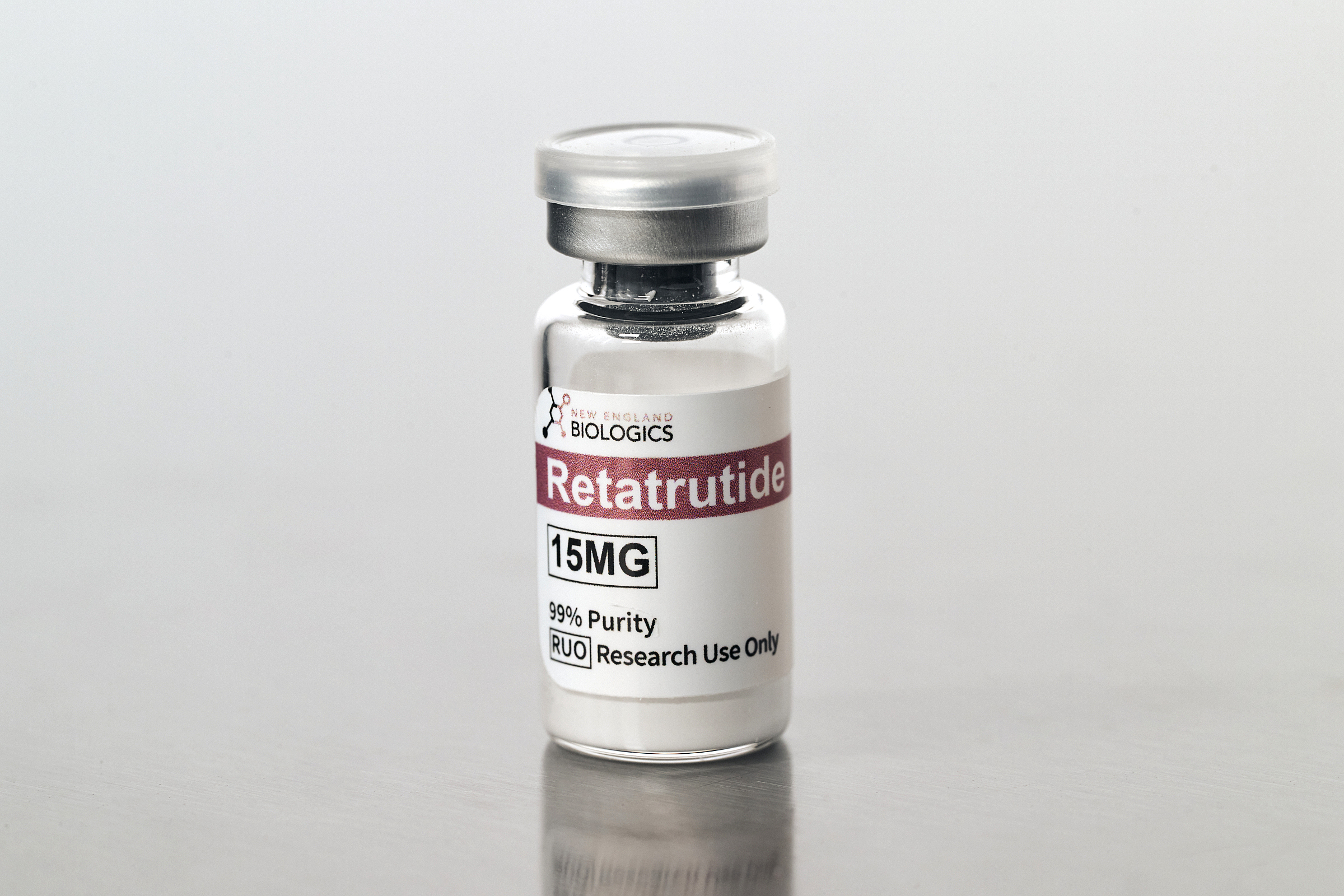
Retatrutide
A novel triple hormone receptor agonist targeting GLP-1, GIP, and glucagon receptors simultaneously. In Phase 2 trials, retatrutide produced unprecedented weight loss of up to 24.2% at 48 weeks.
Also Known As
LY3437943, Triple G Agonist
Mechanism of Action
Product
Half-Life
~6 days
Administration Routes
Dosing Protocols
Key Research Findings
Overview
Retatrutide (LY3437943) is a first-in-class triple agonist peptide that simultaneously activates glucagon-like peptide-1 (GLP-1), glucose-dependent insulinotropic polypeptide (GIP), and glucagon receptors. Developed by Eli Lilly, it represents the next evolution beyond dual agonists like tirzepatide by adding glucagon receptor activity for enhanced energy expenditure.
Mechanism of Action
The triple agonism provides complementary metabolic effects: GLP-1 receptor activation reduces appetite and slows gastric emptying; GIP receptor activation enhances insulin sensitivity and may improve fat metabolism; glucagon receptor activation increases energy expenditure, promotes hepatic lipid oxidation, and reduces liver fat. The glucagon component is key — it drives thermogenesis and lipolysis while the GLP-1/GIP activity prevents the hyperglycemic effect glucagon would normally cause.
Clinical Evidence
Phase 2 trial (n=338): At 48 weeks, the 12 mg dose produced mean weight loss of 24.2% — the highest reported for any anti-obesity medication. 26% of participants lost more than 30% of body weight. Significant reductions in liver fat (up to 86% reduction by MRI), HbA1c, triglycerides, and blood pressure. Phase 3 trials (TRIUMPH program) are ongoing.
Dosing Protocols
Phase 2 protocol: Dose escalation starting at 0.5 mg weekly, titrated over 20-24 weeks to target doses of 1, 4, 8, or 12 mg weekly. Subcutaneous injection once weekly. Slow titration is critical to manage gastrointestinal side effects.
Side Effects
Gastrointestinal events are most common: nausea (25-45%), diarrhea (20-30%), vomiting (10-20%), constipation (10-15%). These are dose-dependent and typically attenuate with continued use. Decreased appetite is expected pharmacologic effect. Heart rate increases of 2-4 bpm observed. Long-term safety data still being collected in Phase 3 trials.
Side Effects & Warnings
Legal Status
Class
Research Status
Clinical TrialsHalf-Life
~6 days
Routes
Category
GLP-1 Agonists