Selank
Russian-approved anxiolytic and nootropic peptide based on tuftsin. Increases BDNF, modulates serotonin/dopamine metabolism, and reduces anxiety without sedation or dependence.
Also Known As
TP-7, Selanc, Thr-Lys-Pro-Arg-Pro-Gly-Pro
Mechanism of Action
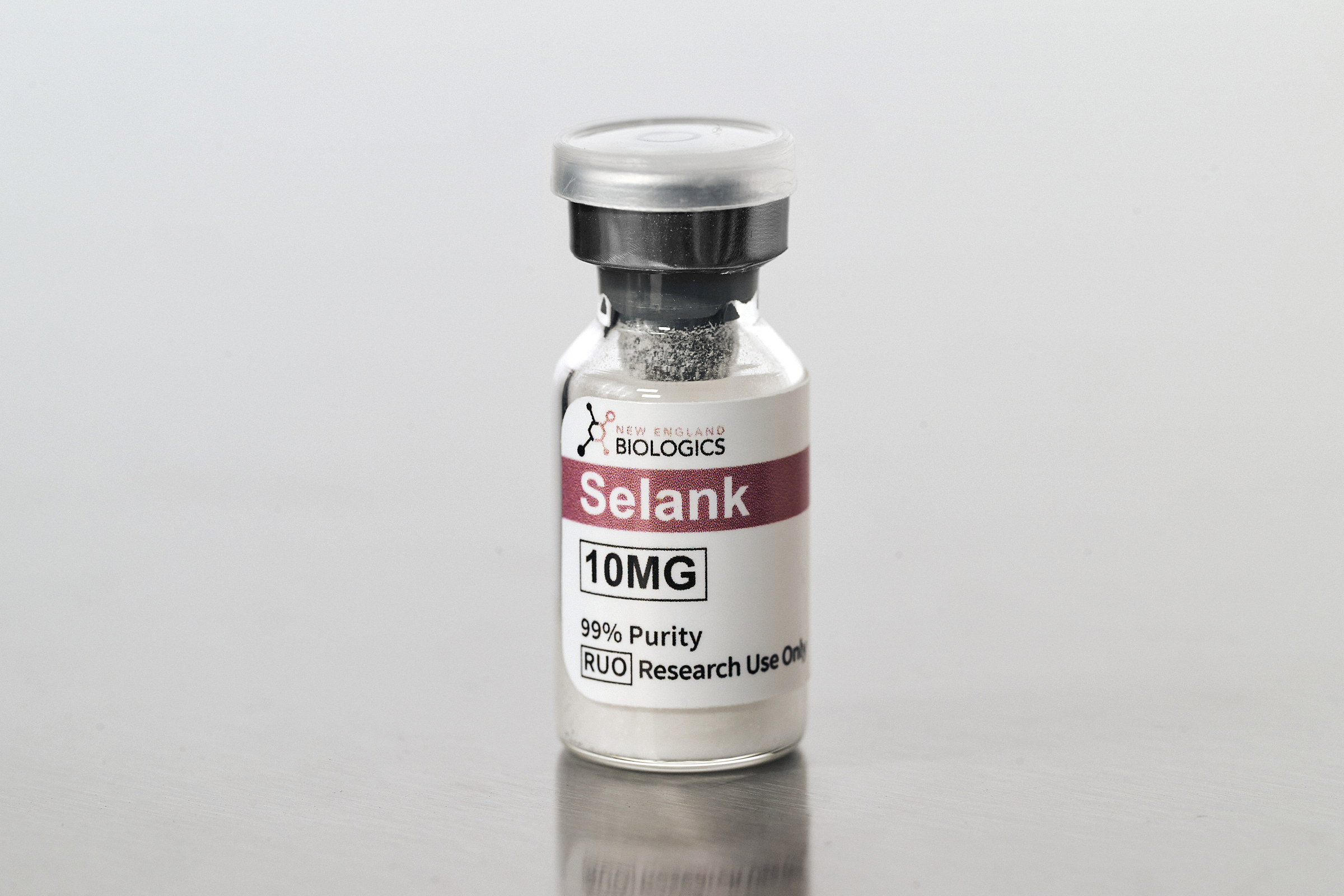
Product
Half-Life
Several minutes (intranasal delivery provides sustained CNS effects)
Administration Routes
Dosing Protocols
Key Research Findings
Selank is a synthetic heptapeptide analog of the naturally occurring immunomodulatory peptide tuftsin, developed at the Institute of Molecular Genetics of the Russian Academy of Sciences. It is approved in Russia as a prescription anxiolytic and nootropic medication, making it one of the few peptide-based nootropics with regulatory approval anywhere in the world.
Mechanism of Action
Selank modulates multiple neurotransmitter systems. It increases brain-derived neurotrophic factor (BDNF) expression in the hippocampus, which is critical for neuronal survival, synaptic plasticity, and memory formation. It modulates the balance of serotonin, dopamine, and norepinephrine metabolism — specifically by inhibiting enkephalin-degrading enzymes, thereby extending the action of endogenous enkephalins in the brain.
Selank also influences GABAergic transmission (contributing to its anxiolytic effects without sedation) and has been shown to modulate the expression of over 50 genes related to neurotransmitter function, immune response, and vascular tone. Its tuftsin backbone provides additional immunomodulatory activity, enhancing phagocyte function and IL-6 production.
Clinical Evidence
Selank has undergone clinical trials in Russia leading to its regulatory approval. Clinical studies demonstrated significant anxiolytic effects comparable to benzodiazepines but without sedation, cognitive impairment, or dependence potential. Zozulya et al. (2008) showed that intranasal selank administration reduced anxiety in patients with generalized anxiety disorder (GAD) with efficacy comparable to medazepam over a 14-day treatment period.
Cognitive enhancement studies have demonstrated improvements in learning, memory, and attention. Uchakina et al. showed selank enhanced cognitive performance under stress conditions. Additional research has explored its potential in treatment-resistant depression, ADHD, and neurodegenerative conditions.
Side Effects & Warnings
Legal Status
Molecular Weight
751.87 g/mol
Amino Acid Sequence
Thr-Lys-Pro-Arg-Pro-Gly-Pro
Class
Research Status
ApprovedHalf-Life
Several minutes (intranasal delivery provides sustained CNS effects)
Routes
Category
Cognitive & Neuroprotective