Sermorelin
FDA-approved GHRH analog (first 29 amino acids of native GHRH) that stimulates physiological pulsatile growth hormone release while preserving natural feedback regulation.
Also Known As
Sermorelin Acetate, GRF 1-29 NH2, Geref, GHRH(1-29)NH2
Mechanism of Action
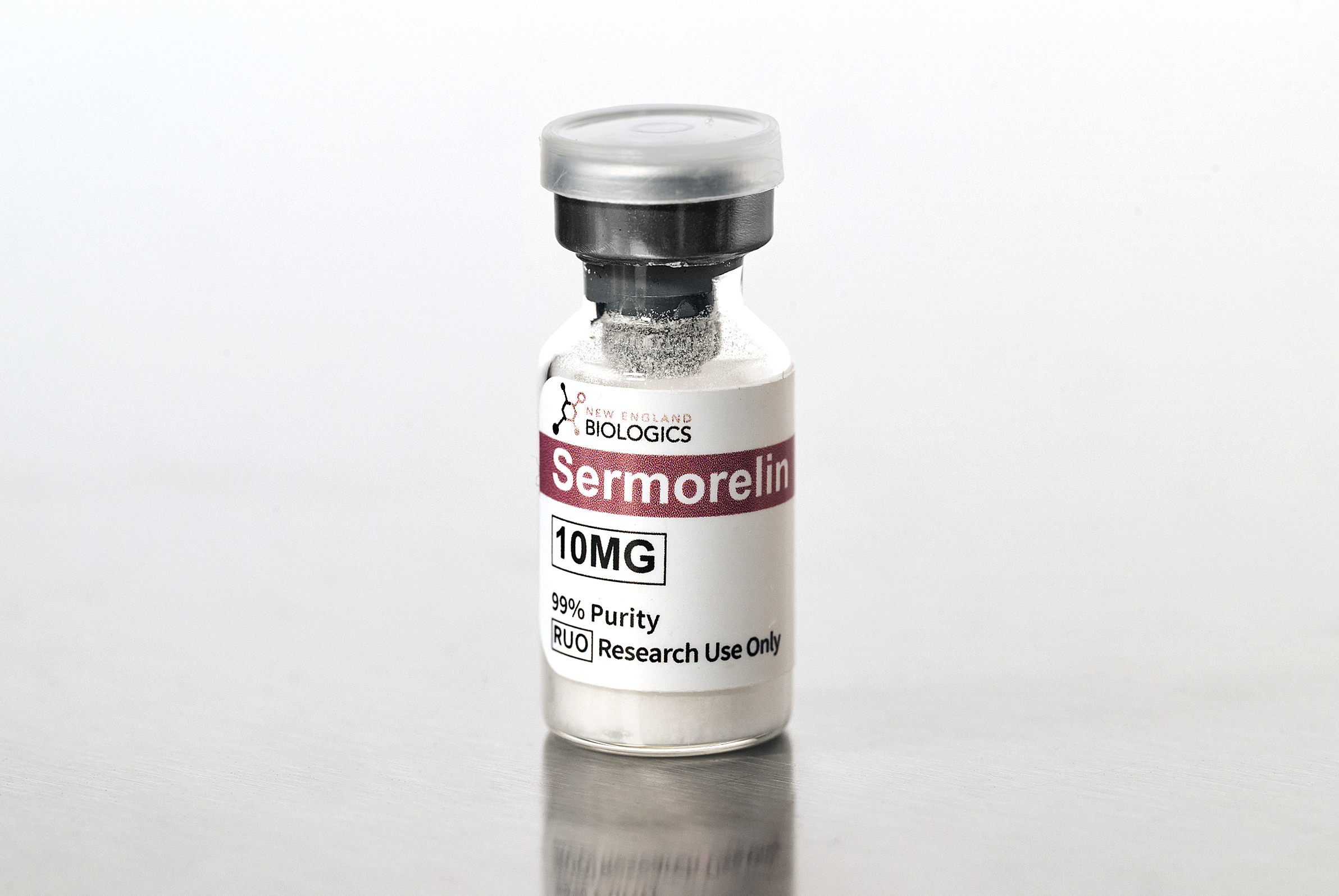
Product
Half-Life
10-20 minutes
Administration Routes
Dosing Protocols
Key Research Findings
Sermorelin (sermorelin acetate) is a synthetic analog of the first 29 amino acids of naturally occurring growth hormone-releasing hormone (GHRH). It is the only GHRH analog that has received FDA approval, originally marketed as Geref® for diagnosing and treating growth hormone deficiency in children.
Mechanism of Action
Sermorelin binds to the GHRH receptor on somatotroph cells in the anterior pituitary gland, stimulating the synthesis and pulsatile release of endogenous growth hormone. Unlike exogenous GH administration, sermorelin preserves the hypothalamic-pituitary feedback loop, meaning GH release remains subject to somatostatin-mediated negative feedback. This results in a more physiological GH secretion pattern and reduced risk of supraphysiological GH levels.
Clinical Evidence
Sermorelin has a well-documented clinical history. It was FDA-approved in 1997 as Geref® for the treatment of idiopathic growth hormone deficiency in children with growth failure. Clinical trials demonstrated significant increases in growth velocity, IGF-1 levels, and lean body mass. In adult studies, sermorelin administration has been associated with improved sleep quality, increased lean body mass, decreased body fat, and improved skin elasticity.
Walker (2006) published data showing that 6 months of sermorelin therapy in adults resulted in significant improvements in body composition, including increased lean mass and decreased abdominal adiposity. The peptide has also been studied for its effects on sleep architecture, with research showing enhancement of slow-wave sleep.
Clinical Advantage
Sermorelin holds a unique position among GH-releasing peptides due to its history of FDA approval and extensive clinical safety data. Its mechanism preserves natural feedback regulation, making it a conservative first-line approach to GH optimization in research and clinical settings.
Side Effects & Warnings
Legal Status
Molecular Weight
3357.93 g/mol
Amino Acid Sequence
Tyr-Ala-Asp-Ala-Ile-Phe-Thr-Asn-Ser-Tyr-Arg-Lys-Val-Leu-Gly-Gln-Leu-Ser-Ala-Arg-Lys-Leu-Leu-Gln-Asp-Ile-Met-Ser-Arg-NH2
Class
Research Status
ApprovedHalf-Life
10-20 minutes
Routes
Category
Growth Hormone Peptides