SLU-PP-332
SLU-PP-332 is an ERR (Estrogen-Related Receptor) agonist that mimics the metabolic effects of exercise. It activates pathways involved in fat metabolism, mitochondrial biogenesis, and endurance enhancement without physical activity.
Also Known As
Exercise mimetic, ERR agonist
Mechanism of Action
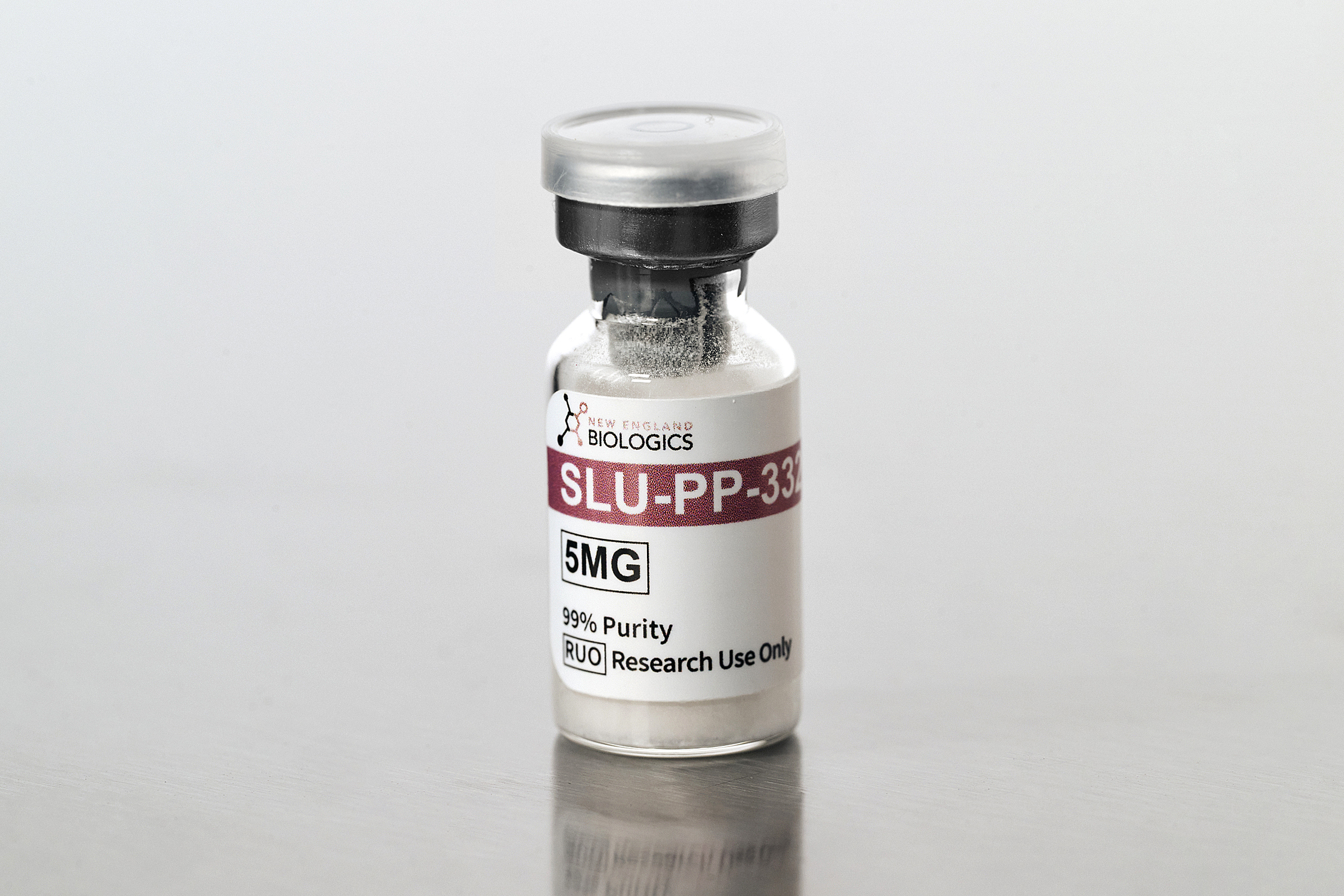
Product
Half-Life
Under investigation
Administration Routes
Dosing Protocols
Key Research Findings
What is SLU-PP-332?
SLU-PP-332 is a small molecule agonist of Estrogen-Related Receptors (ERRs), particularly ERR-alpha, ERR-beta, and ERR-gamma. Developed at Saint Louis University (hence the SLU prefix), this compound has gained significant attention as an “exercise mimetic” — a substance that can activate many of the same metabolic pathways that are normally triggered by physical exercise. It represents a novel approach to metabolic enhancement and has shown remarkable effects on fat metabolism and endurance in preclinical studies.
Mechanism of Action
SLU-PP-332 activates all three Estrogen-Related Receptors (ERR-alpha, beta, and gamma), which are key regulators of energy metabolism. These nuclear receptors control the expression of genes involved in mitochondrial biogenesis, oxidative phosphorylation, fatty acid oxidation, and muscle fiber type switching. By activating ERRs, SLU-PP-332 upregulates the same metabolic gene networks that are activated during exercise, promoting a shift toward oxidative metabolism and type I (slow-twitch) muscle fiber characteristics.
Potential Benefits
- Fat metabolism — Increases fatty acid oxidation and may reduce body fat without exercise
- Endurance enhancement — Promotes metabolic adaptations similar to endurance training
- Mitochondrial biogenesis — Stimulates the creation of new mitochondria in muscle cells
- Muscle fiber optimization — May promote conversion toward fatigue-resistant type I muscle fibers
- Metabolic health — Potential applications for metabolic syndrome and obesity-related conditions
- Exercise mimetic — Activates exercise-responsive pathways independent of physical activity
Research Overview
Published research from Saint Louis University (2023) demonstrated that SLU-PP-332 significantly increased endurance capacity in mice and reduced body fat accumulation even without changes in physical activity or diet. The compound was shown to activate ERR-dependent gene expression in skeletal muscle, leading to enhanced oxidative metabolism. Studies also showed improvements in muscle fiber composition and mitochondrial density. Research is ongoing into potential therapeutic applications for obesity, type 2 diabetes, and muscle wasting conditions.
Administration
SLU-PP-332 requires a special reconstitution process. First dissolve the lyophilized powder in 0.5ml DMSO, then slowly add this mixture drop-by-drop to 2ml of bacteriostatic water in a separate mixing vial. This creates 2.5ml of solution providing 10 doses. Using an insulin syringe marked 1-100 units, draw 25 units for a single daily dose. Administered subcutaneously.
Side Effects & Warnings
Legal Status
Class
Research Status
PreclinicalHalf-Life
Under investigation
Routes
Category
Performance & Body Composition