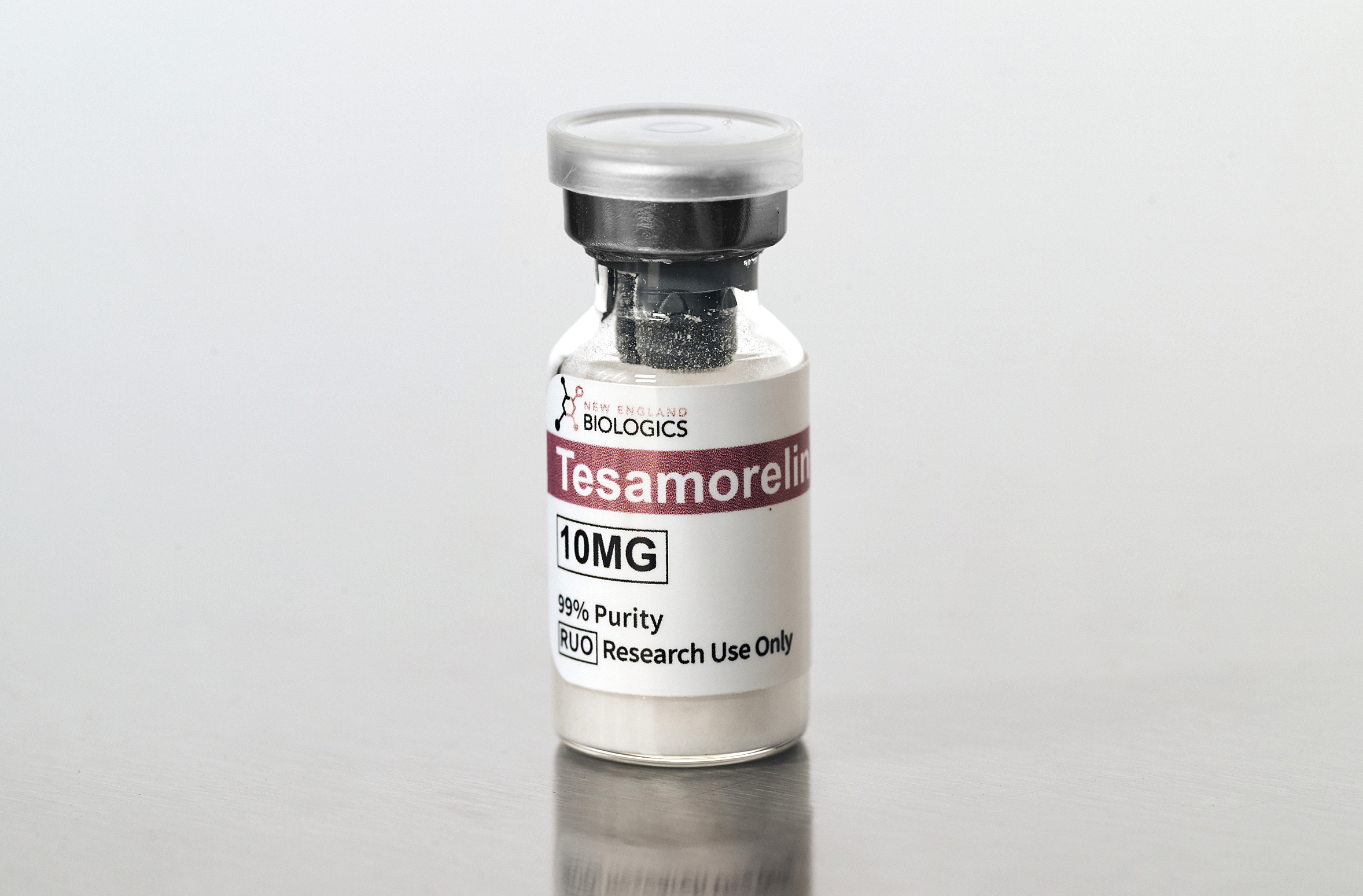
Tesamorelin
FDA-approved GHRH analog (Egrifta®) with proven efficacy for visceral fat reduction. The most clinically validated growth hormone-releasing peptide available.
Also Known As
Tesamorelin Acetate, Egrifta, TH9507, trans-3-hexenoic acid-GHRH(1-44)
Mechanism of Action
Product
Half-Life
26-38 minutes
Administration Routes
Dosing Protocols
Key Research Findings
Tesamorelin (tesamorelin acetate) is a synthetic analog of growth hormone-releasing hormone (GHRH) with a trans-3-hexenoic acid modification at the N-terminus. It is FDA-approved under the brand name Egrifta® for the reduction of excess abdominal fat in HIV-infected patients with lipodystrophy.
Mechanism of Action
Tesamorelin binds to GHRH receptors in the anterior pituitary gland, stimulating the production and release of endogenous growth hormone. The trans-3-hexenoic acid modification enhances its stability and bioavailability compared to native GHRH. Like sermorelin, it maintains the natural pulsatile pattern of GH release and preserves hypothalamic feedback regulation.
Clinical Evidence
Tesamorelin is the most clinically validated GHRH analog currently available. Two pivotal Phase III trials (LIPO-010 and LIPO-011) involving over 800 patients demonstrated significant reductions in visceral adipose tissue (VAT) averaging 15-18% over 26 weeks. The FDA approved tesamorelin in 2010 based on these trials.
Subsequent research has explored tesamorelin beyond HIV lipodystrophy. Stanley et al. (2015) showed that tesamorelin reduced liver fat in HIV patients with nonalcoholic fatty liver disease. Studies in non-HIV populations have demonstrated improvements in cognitive function in older adults, with Cognitively Normal older adults showing improved executive function and verbal memory during tesamorelin administration.
Clinical Status
Tesamorelin represents the current gold standard among GHRH analogs due to its FDA approval, extensive Phase III data, and ongoing clinical research in multiple indications beyond its approved use.
Side Effects & Warnings
Legal Status
Molecular Weight
5135.89 g/mol
Amino Acid Sequence
trans-3-hexenoic acid-Tyr-Ala-Asp-Ala-Ile-Phe-Thr-Asn-Ser-Tyr-Arg-Lys-Val-Leu-Gly-Gln-Leu-Ser-Ala-Arg-Lys-Leu-Leu-Gln-Asp-Ile-Met-Ser-Arg-Gln-Gln-Gly-Glu-Ser-Asn-Gln-Glu-Arg-Gly-Ala-Arg-Ala-Arg-Leu-NH2
Class
Research Status
ApprovedHalf-Life
26-38 minutes
Routes
Category
Growth Hormone Peptides