Testagen
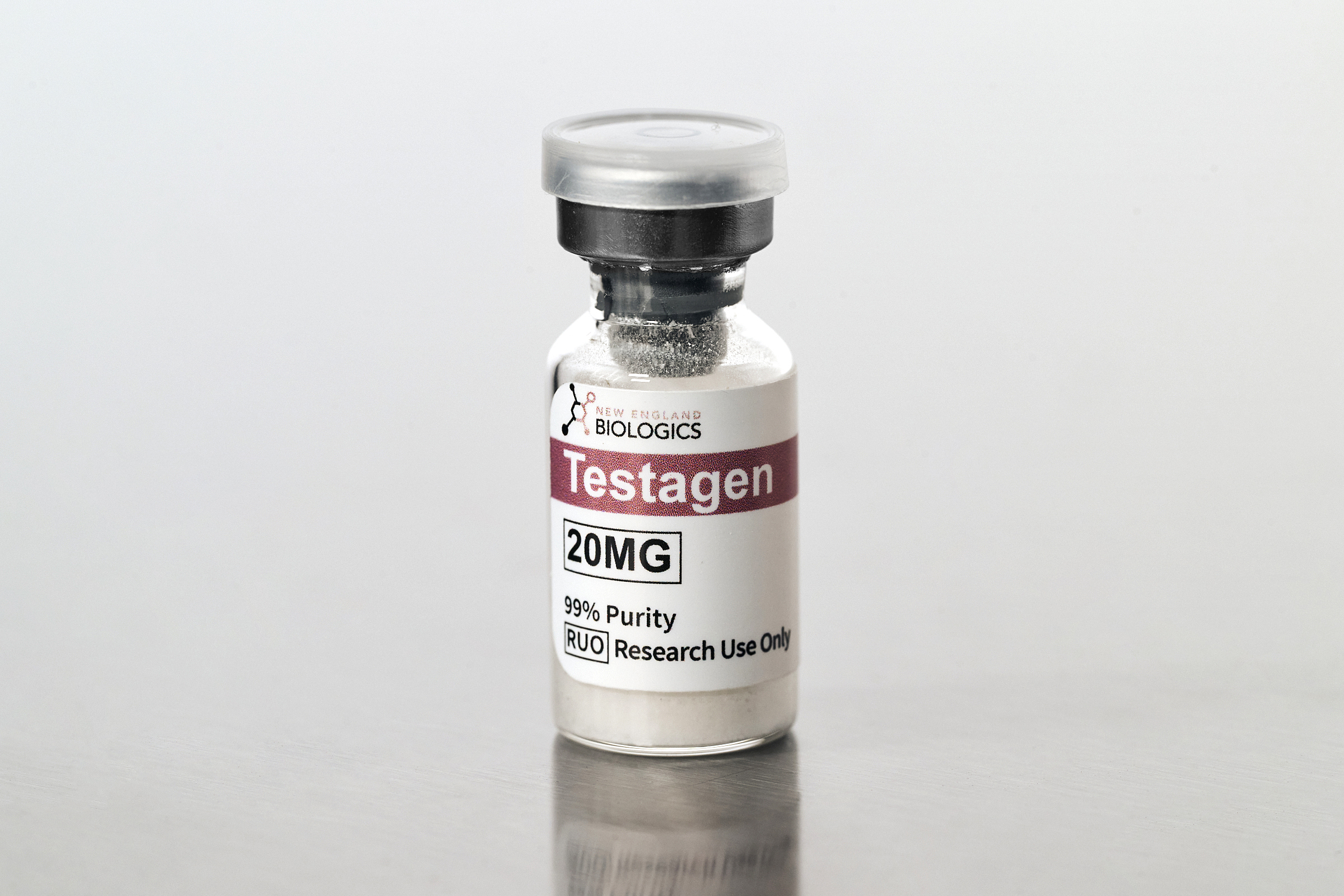
Testagen is a bioregulator peptide composed of the amino acids Lys-Glu-Asp-Gly, designed to support testicular function and testosterone production. Part of the Khavinson peptide family targeting the male reproductive system.
Also Known As
Lys-Glu-Asp-Gly, KEDG peptide
Mechanism of Action
Product
Half-Life
Short (minutes); effects are epigenetic and cumulative
Administration Routes
Dosing Protocols
Key Research Findings
What is Testagen?
Testagen is a synthetic tetrapeptide bioregulator (Lys-Glu-Asp-Gly) developed by Professor Vladimir Khavinson at the St. Petersburg Institute of Bioregulation and Gerontology. It is specifically designed to normalize testicular function at the cellular level, supporting the Leydig cells responsible for testosterone production. As a bioregulator peptide, Testagen works through epigenetic mechanisms to restore healthy gene expression patterns in testicular tissue.
Mechanism of Action
Testagen interacts with DNA sequences in Leydig cells and other testicular tissue to modulate gene expression related to steroidogenesis (testosterone production), spermatogenesis, and cellular maintenance. The peptide helps restore optimal testicular function by influencing transcription factors involved in the hypothalamic-pituitary-gonadal (HPG) axis regulation, promoting healthy testosterone synthesis without suppressing natural hormone production.
Potential Benefits
- Testosterone support — May help optimize natural testosterone production through Leydig cell support
- Reproductive health — Supports overall testicular function and spermatogenesis
- Hormonal balance — Helps normalize HPG axis function without external hormone introduction
- Anti-aging (male) — Counteracts age-related decline in testosterone production
- Energy and vitality — May improve energy levels through optimized testosterone production
- Body composition — Potential indirect benefits through improved hormonal status
Research Overview
Testagen has been studied in Russian bioregulation research with focus on male reproductive health and testosterone optimization. Animal studies have demonstrated improvements in testosterone levels and Leydig cell function in aging models. Clinical observations suggest benefits for men experiencing age-related testosterone decline, with improvements in hormone levels and associated symptoms. The peptide has shown a favorable safety profile and does not suppress the HPG axis like exogenous testosterone.
Administration
Testagen is reconstituted with 2ml of bacteriostatic water. Using an insulin syringe marked 1-100 units, draw 10 units for a daily dose of 0.5mg. One 20mg vial provides 40 doses. Administered subcutaneously.
Side Effects & Warnings
Legal Status
Class
Research Status
Clinical TrialsHalf-Life
Short (minutes); effects are epigenetic and cumulative
Routes
Category
Longevity & Anti-Aging